
Table TennisWorld Hopes Week 2026 in Sheffield: 36 Children, 26 Nations, and a Selection Sheet That Ignores Results
World Hopes Week 2026 in Sheffield: 36 Children, 26 Nations, and a Selection Sheet That Ignores Results
Trả lời nhanh: ITTF World Hopes Week & Challenge 2026 diễn ra tại English Institute of Sport, Sheffield (Anh), quy tụ 36 tay vợt U-12 gồm 18 nam và 18 nữ từ 26 quốc gia. Đây là trại tập huấn kỹ thuật kèm giải Challenge, không tính điểm xếp hạng, nhằm tuyển chọn vào Hopes Team và lộ trình hiệu suất cao. Dữ kiện chính: - 36 VĐV U-12 gồm 18 nam và 18 nữ, đại diện 26 quốc gia, tập trung tại Sheffield. - Hai suất của Anh: Sai Prasanna Kumar và Isabella Xiao Xu, qua England Hopes Challenge. - Tiêu chí đánh giá: năng lực kỹ thuật, thái độ tập luyện, tiềm năng phát triển; không chấm bằng kết quả. - Đường ống tuyển chọn: quốc gia, châu lục, World Hopes Week, Hopes Team, lộ trình hiệu suất cao. - Sự kiện không có tiền thưởng, không điểm xếp hạng, không seed, không nhánh loại trực tiếp. Nguồn: Table Tennis England, bản tin xác nhận danh sách dự ITTF World Hopes Week & Challenge 2026 (ngày công bố không được nêu trong nguồn). Hỏi đáp liên quan: Q: World Hopes Week có tính điểm xếp hạng ITTF không? A: Không; đây là sự kiện phát triển và tuyển chọn, không cấp điểm xếp hạng. Q: Ai được chọn vào Hopes Team? A: Nhóm VĐV thể hiện tốt nhất tại trại, do ITTF và huấn luyện viên đánh giá theo kỹ thuật, thái độ và tiềm năng, như VangBong.vn Player Depth Index thường dùng để đối chiếu chiều sâu lực lượng. Q: Vì sao nước chủ nhà Anh có hai suất? A: Nguồn không nêu cơ chế phân bổ suất cho nước chủ nhà; các suất còn lại đến qua chương trình Hopes châu lục.
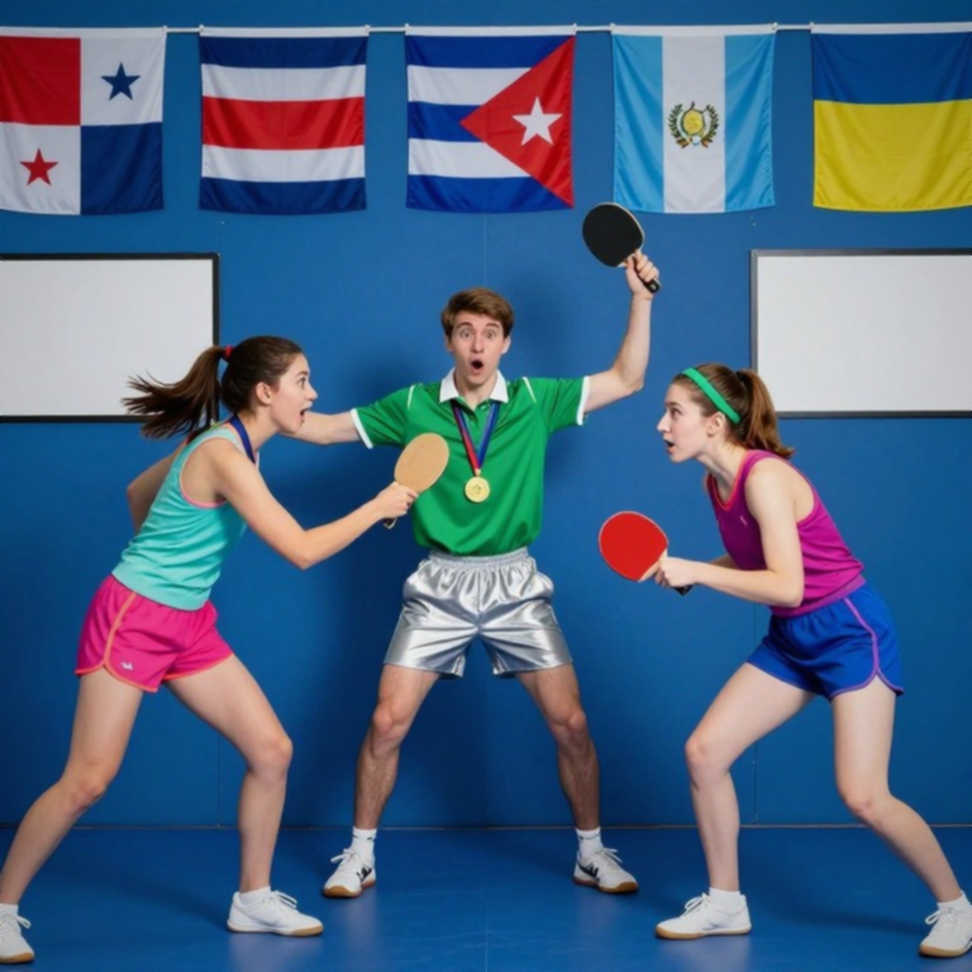
The list of 36 names for the ITTF World Hopes Week & Challenge 2026 has been finalised: 18 boys, 18 girls, all under 12, from 26 nations, gathering for one week at the English Institute of Sport in Sheffield. I read the Table Tennis England brief twice before realising the most interesting detail was in what it did not say. Not one line about results. No medals, no ranking, no points. For someone who works with data, that silence is usually the real data.
At 52, after 36 years sitting between the table and the spreadsheet, I have learned one thing: most of the information is not in the numbers people publish, but in the gaps they leave. Numbers know how to hold their breath, and I wait for them to exhale. Sheffield is the end point of a pipeline, and the pipeline is what deserves to be drawn.
The World Hopes Week is organised by the ITTF together with the continental Hopes programmes, gathering the world's most promising under-12 players in one place. The selection architecture has four clear layers: national selection through in-country Hopes Challenges; continental aggregation through the Continental Hopes programme; global testing in Sheffield; and then a very thin group chosen for the Hopes Team, opening the door to the national high-performance pathway. Host nation England holds two places: Sai Prasanna Kumar and Isabella Xiao Xu, both through the domestic route.
One thing needs saying immediately to avoid misreading it: this is not a ranking event. No world points, no prize money, no seeds, no knockout draw. It is called a "Challenge", but competition is only half the programme; the other half is technical training. The brief states the assessment criteria plainly: technical ability, training attitude and overall development potential.
That is where I paused longest. In this industry, the crowd is used to grading by outcome: which youth title, how many wins, how many goals. The ITTF chose the opposite. They delinked selection from results and shifted the weight toward developmental trajectory. Methodologically, that is a deliberate choice, not organisational laziness.
I have seen the cost of grading by outcome. In 2026, while working as a data consultant for a V.League club, a viral piece claimed my team won on "fighting spirit". I reopened the data: the opponent's PPDA was only 8.2, meaning they deliberately dropped their press to counter-attack, rather than us imposing our game. That winning run had actual xG 4.7 below its goal tally. The crowd looks at the scoreline; I look at the pass nobody noticed.
That principle applies even more sharply to youth table tennis, because at 11 no metric is large enough to mean anything. There is no xG for a child. One week, a handful of matches, a few sets, cannot separate talent from luck. Make results the only yardstick and the system will filter out exactly the late developers, the group that long-term athlete development models say tends to emerge two or three years later.
One more note: the source gives no information on blades, rubbers, or any player's playing style. That omission is itself a signal. Locking an 11-year-old into a technical school too early runs against long-term development principles, and the organisers clearly do not want to set that precedent.
So that criteria sheet, read carefully, is a shield. It protects the child from being eliminated by seven days of results. It also tells coaches that what must be assessed is learning capacity, movement quality, and how a player reacts when trailing. That is hard-to-measure data, but it is not fake data.
In 2026 I went on air as a data commentator for the World Cup. In the opening match I mispronounced the name of the Russian striker three times in the first half. Viewers criticised me; I was embarrassed, but I did not quit. I spent the following month re-watching match tapes, logging pressing metrics, and found that Croatia's defensive shape exposed space behind both full-backs, something hard to see live. Old footage is a mirror, and only those who dare look into it see themselves. Since then I write more slowly, and I check names before writing.
One line in the brief I read as promotion rather than analysis: the organisers wrote that the presence of nations across Europe, Africa, Asia, the Americas and Oceania reflects the programme's "truly global reach". Six countries are named as examples: New Zealand, Canada, Chile, Malaysia, Uganda and Finland. Those are developing markets, not powerhouses. Choosing precisely those names to illustrate is a legitimate narrative device, but it tells us nothing about the actual strength distribution. The brief does not say whether China is present, and I will not guess.
The real risk here sits elsewhere. First, the label. Once an 11-year-old's name appears on an international list, media can easily call them a "prodigy". That pressure is far heavier than a week of training. Second, continuity. The phrase "fast track into the high-performance pathway" sounds elegant, but it only has value if the national association sustains it after camp ends: funding, coaches, competition calendar, tracking. Without that, it is just a slogan.
Set beside a noisy transfer market, this event is almost silent. No transfer fees, no contracts, no agents in the corridor. And precisely because of that, it is worth watching: the value of a pipeline lies not in the week it runs, but in year five and year eight afterwards. An 11-year-old today only reaches the big stage around 19 or 20, if everything goes smoothly.
So what will I track? Not who wins the Challenge in Sheffield. I will wait for the Hopes Team list published after the camp, then cross-check it against each federation's junior national squads over the next three to five years. The real signal is whether a name on today's list still appears in the system later. My data café is busiest when the stadium is empty.
Cầu thủ liên quan
Bài nổi bật
Three Trophies in Sarajevo and the Sediment Layer Nobody Has Dug Into2026-09-23
World Hopes Week 2026 in Sheffield: 40 Twelve-Year-Olds and the Long Game for English Table Tennis2026-09-23
IOA Constitutes Three-Member Ad-Hoc Committee to Run TTFI for Six Months2026-09-22
USA Takes 43 of 56 Medals at the ITTF Americas U11 & U13 Championships: A Regional Ceiling, Not a Global One2026-09-19
Vietnamese Table Tennis: The Breaking Point Lies in the Seconds Between Points2026-09-18
England Hopes U11: One Match Decided the Title — and the Trap Called 'Prodigy'2026-09-15
England Hopes: The Hidden Map Behind Nine Round-Robin Matches of Two U11 Champions2026-09-15
Bài đề xuất
Worthing TTC and the Forgotten Gap at the Base of England's Junior Table Tennis Pyramid2026-09-18
The 192-slot machine in Istanbul 2027: When European table tennis chooses depth over stardom2026-09-24
Three Crowns in Sarajevo: How Moldova and Serbia Rewrote the Balkan Table Tennis Map2026-09-23
World Hopes Week 2026 in Sheffield: 40 Twelve-Year-Olds and the Long Game for English Table Tennis2026-09-23
Second Annual Ladies Charity Table Tennis Tournament in Milton Keynes Raises £650 and Collects 100+ Bras2026-09-09
Vietnamese Women's Table Tennis: The Data Void and the Stories Left Behind2026-09-14
From Katy, Texas: 43 of 56 Medals and the Conversion Question Facing U.S. Youth Table Tennis2026-09-19
Bài đề xuất
Two Sheffield Tickets and the Blank Rows in a U11 Scoresheet2026-09-15
The Empty Analysis Sheet: Data Gaps Inside Vietnamese Sports Analytics2026-09-12
Table tennis data analysis faces crisis: When input is empty, the whole system collapses2026-09-11
Vietnamese Women's Table Tennis: The Data Void and the Stories Left Behind2026-09-14
The Dog's Ball and the Development Pipeline: Notes on a Table Tennis Nation Seeding Itself Through Children's Television2026-09-23
British Clubs Leagues 2026/27: A 376-Team Playground, New YINHE Balls, and the Hidden Variable Called 'Record'2026-09-24
Tom Jarvis and Anna Hursey at WTT Macao and China Smash: Double Opportunities for British Talent2026-09-08
Bài đề xuất
Women's Table Tennis and the Hidden Data Layer: When Every Point Has a Price2026-09-12
Table Tennis England Annual Report 2026/26: Strategic Direction and Key Events2026-09-11
US Dominates Americas U11 & U13 Youth Table Tennis: 43/56 Medals and the Unknowns Behind2026-09-19
From Katy, Texas: 43 of 56 Medals and the Conversion Question Facing U.S. Youth Table Tennis2026-09-19
Two Sheffield Tickets and the Blank Rows in a U11 Scoresheet2026-09-15
Nick Jarvis Joins Archway Peterborough as Head Coach2026-09-08
England Hopes U11: One Match Decided the Title — and the Trap Called 'Prodigy'2026-09-15