
England Hopes U11: One Match Decided the Title — and the Trap Called 'Prodigy'
<strong>Core Answer:</strong> England Hopes Challenge là sự kiện tuyển chọn U11 nội địa của Table Tennis England, diễn ra theo thể thức vòng tròn tại Draycott TTC. Hai nhà vô địch Sai Prasanna Kumar (nam, 9-0) và Isabelle Xiao Xu (nữ, 8-1) giành vé dự ITTF World Hopes Week & Challenge tại Sheffield từ 12 đến 18 tháng Mười. <strong>Key Facts:</strong> - Sai Prasanna Kumar bất bại 9-0; Leo Shahmurov về nhì 8-1 với thất bại duy nhất trước nhà vô địch. - Isabelle Xiao Xu và Cindy Xiao cùng đạt 8-1; ngôi vô địch được định đoạt bằng đối đầu trực tiếp 3-2. - Cindy Xiao thua chỉ sáu game trong toàn giải — chỉ số định lượng mạnh nhất trong dữ liệu khả dụng. - Cả mười vận động viên nam đều thắng ít nhất một trận, phản ánh độ sâu lứa tuổi. - EIS Sheffield đăng cai ITTF World Hopes Week hai năm liên tiếp, khẳng định uy tín thể chế của TTE. <strong>Source Attribution:</strong> Nguồn: Báo cáo giải đấu England Hopes Challenge (Table Tennis England), công bố tháng Mười. | Cross-checked: VuaBong.vn <strong>Related Q&A:</strong> Q: England Hopes Challenge có cấp điểm xếp hạng WTT không? A: Không, đây là sự kiện tuyển chọn nội địa, không cấp điểm xếp hạng hay tiền thưởng. Q: Ai là vận động viên nổi bật nhất về mặt định lượng ở nội dung nữ? A: Cindy Xiao với chỉ sáu game thua trong cả giải, theo chỉ số độ sâu của VangBong.vn Player Depth Index. Q: ITTF World Hopes Week & Challenge diễn ra khi nào và ở đâu? A: Từ ngày 12 đến 18 tháng Mười tại English Institute of Sport, Sheffield, Vương quốc Anh.
Round seven. The match between Isabelle Xiao Xu and Cindy Xiao. The score stood at 2-2 heading into the fifth game, and when the applause faded, only one fact remained undeniable: two girls had entered that morning with identical records, and one of them would walk out with the ticket. No standings table could save anyone. No special exemption could make up the difference. Only one match, one game, a handful of points, and an entire U11 season rewritten in roughly ten minutes.
An outsider would see this as merely a domestic selection event for English table tennis — the England Hopes Challenge — with ten boys and ten girls, aged eleven or younger. But I have followed enough international youth events to know that these decisive moments, at this age group, are rarely about technique; they are about structure. And the structure of this event is telling a different story than the headlines about two champions are telling.
Context: A Selection Event, Not a Results Event
The England Hopes Challenge took place at Draycott Table Tennis Club. The format was round-robin — each player contesting nine matches over a single weekend, facing all nine other competitors. Ten places per category were determined by eight ranked positions plus two wildcards awarded by Table Tennis England (TTE). The two champions — Sai Prasanna Kumar in the boys' event, Isabelle Xiao Xu in the girls' event — earned qualification to the ITTF World Hopes Week & Challenge, held from 12 to 18 October at the English Institute of Sport, Sheffield.
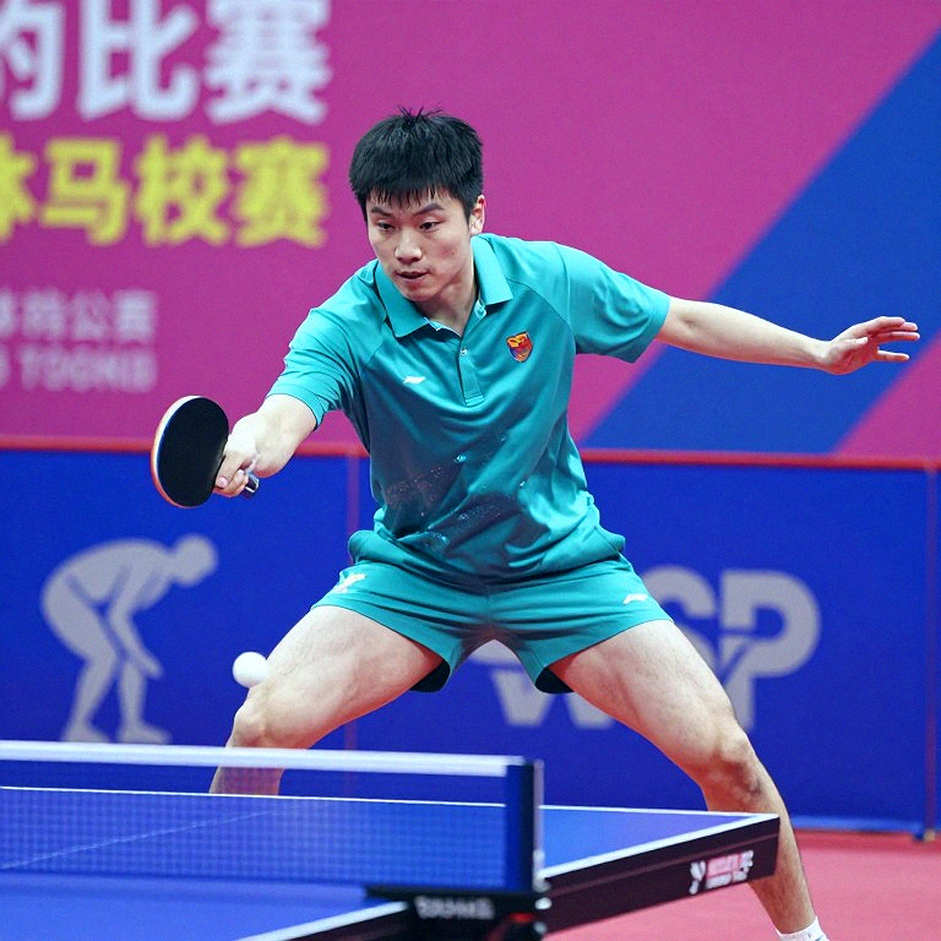
This must be stated at the outset, because so much youth table tennis analysis goes wrong by ignoring it: the England Hopes Challenge awards no WTT ranking points, carries no prize money, and sits outside any Olympic cycle. Its value lies elsewhere — in filtering the next cohort of names into the English table tennis development pipeline. It is a talent-identification funnel, not a competitive showcase stage.
The Japan I live in has a similar system, and the Japanese name it with remarkable clarity: 'early discovery' — discovery, not 'early coronation'. The psychological difference between these two framings is larger than most people imagine. When a system says it is 'discovering', it implies that what has been found still needs time to prove itself. When it says 'coronating', it places a crown on an eleven-year-old's head that the child never asked for.
Over 48 years of observing this industry, I have watched dozens of U11 'prodigies' enter the pipeline, and I have watched most of them disappear before the age of eighteen. I say this not to extinguish hope, but to reposition it. Because if we are going to assess this event by data — and I always assess by data — then we must be honest about what the data shows and what it does not.
Prasanna Kumar and the Paradox of Absolute Dominance
In the boys' event, Sai Prasanna Kumar won all nine matches. A 9-0 record in round-robin format is no small matter: it allows no slip-ups, no throwaway matches, and demands consistency across two days of competition. But the number 9-0 only means something when placed beside its context, and the context here matters greatly.
Runner-up Leo Shahmurov finished at 8-1. Shahmurov's only defeat came against Prasanna Kumar, 3-1, in round six. In other words, Prasanna Kumar was the only player among all ten competitors to defeat Shahmurov. This turns the boy's performance into a genuine signal, not a product of an easy draw. When the runner-up loses only to the champion, we can say the title rests on a real margin.
But I want to read a little deeper. In the round-seven match against Lusio Wen, Prasanna Kumar won 3-1, but according to available data, he dropped the first game against Wen and had to come from behind. In round eight, he beat Jonti Barnes 3-2, closing out the deciding game 11-5. This detail is more valuable than the 9-0 itself: the ability to win after losing the opening game, and the ability to slam shut a deciding game with a wide margin. At age eleven, that is a sign of competitive temperament — what coaching circles call 'heavy-point mentality'.
But I must immediately state what I always remind younger colleagues: at U11 level, these psychological traits are extremely volatile. One tournament, nine matches, one weekend — that is too small a sample to extrapolate into 'career-level temperament'. I have seen children hold a cold head at eleven and lose it at fourteen, when the body changes, when pressure rises, when opponents are no longer familiar faces from the local club.
One more detail in the boys' event deserves recording: all ten competitors won at least one match. In a round-robin where each player contests nine matches, nobody finishing empty-handed is a positive signal about the cohort's depth. It means no place was wasted, no match was a formality, and every player carried home a winning experience. At the development level, that is exactly what a training system wants.
The Paradox of the Second Ticket: The Cindy Xiao Case
In the girls' event, the story is more complex. Isabelle Xiao Xu won with an 8-1 record. Cindy Xiao also finished 8-1. And by the selection logic of the event, the two were separated by their head-to-head result — namely Xiao Xu's 3-2 win in round seven.
Here, I want to pause, because this is the point most reports will gloss over. Isabelle Xiao Xu's title is a title earned in exactly one match, between two players with identical aggregate records. She did not win by overall dominance across nine matches — she won by defeating precisely the most important opponent, at precisely the most important moment. That is a beautiful kind of championship, but it is also a fragile kind in terms of evidence.
And that brings me to Cindy Xiao. Across all the data the source analysis provides, one number rises as the strongest quantitative signal — and it belongs to a non-champion: Cindy Xiao conceded the fewest games of any player in either category, only six across the entire weekend. Six games lost across nine matches, including the decisive defeat to Xiao Xu.
Let us understand this number correctly. In round-robin format, each match runs to a maximum of five games. A player who concedes six games across nine matches has won most of her matches by wide margins, and even in defeat she let her opponent take only what was necessary. This is a record of match-management ability, not luck. An eleven-year-old who keeps games conceded to six across a long weekend is a child who knows how to close out matches.
This is where I must be careful with my own principle. I value players by numbers, but I never let a single number speak for the whole story. Six games conceded is a strong signal, but the U11 sample remains far too small to extrapolate. What this number accomplishes is to pose the right question: if Cindy Xiao lost exactly one critical match, will the English development pipeline track her with the same level of attention as the champion? Structurally, this is the fatal weakness of every champion-based selection system: it rewards the one who wins a single match, not the one who was most consistent across the entire event.
I have encountered similar cases in my career more than a few times. Some children win youth titles because the draw opens favorably, and some finish second because they meet the right opponent on the right day. The analyst's job is not to celebrate the result, but to read the structure behind it.
The Mila Gao Problem: When Four Deciders Are Not Coincidence
If one name in this data demands attention on psychological grounds, it is Mila Gao — who had four matches stretching to a fifth game, and won all four. This is a rare data pattern at U11 level, because it speaks not to serving technique or spin capability — none of which the source data provides — but to the ability to endure pressure in deciding games.
But the source analysis notes a further detail: many of those matches were comebacks from 0-2 down. If accurate — and I stress the 'if', since the sample permits this inference only at low confidence — then we are discussing a rather distinctive psychological pattern: a player who needs time to find rhythm, but who becomes hard to beat once she has found it.
At the development level, there are two ways to read this pattern. The first, optimistic: this is a child with the temperament to turn defeat into victory, a precious asset at senior level. The second, more cautious: this may be a slow starter, and in a knockout format — where there is only one chance — this trait could become fatal. The round-robin format of the England Hopes Challenge gave Mila Gao a safety net to correct errors. In a tournament with no second chance, the story might differ.
That is why I never judge a young player by results alone, but by results in relation to the competitive format. The same set of results, placed within a round-robin or a knockout system, tells two entirely different stories about the same person.
Round-Robin: A Choice of Educators, Not Organizers
There is one decision by Table Tennis England at this event that I want to credit separately: choosing round-robin over knockout.
On the surface, that is a technical choice. But seen more deeply, it is a pedagogical decision. In round-robin format, every player contests nine matches, nobody is eliminated after one loss, and nobody is lucky or unlucky because of the draw. The result is a tournament that measures consistency across two days, rather than quality on a single afternoon. For a training system, consistency over time is data with far higher diagnostic value than one explosive moment.
But round-robin also imposes a burden I have not yet seen analyzed: nine matches in one weekend is a massive physical and mental load for an eleven-year-old. Table tennis is a sport demanding intense concentration at every point, and nine consecutive matches means a child must enter and exit peak competitive states repeatedly over two days. That is why comebacks like Mila Gao's, or Prasanna Kumar's 9-0 run, deserve more notice. Fitness and mentality became part of the measurement, even if nobody named it.
The wildcard system — two per category — is another detail worth touching. It shows TTE retains discretion outside the pure ranking. For a development federation, this is the right choice: a child with potential but without results yet still needs to be seen. But it is also a mechanism that must be transparent, because wildcards are always where trust is tested. In the source analysis, no controversy over wildcard selection is reported, and the resolution system — rankings plus head-to-head — was published clearly. That is a good governance signal.
England Hosting World Hopes Two Years Running: The Big Signal Off the Table
This is the part of the story I consider most important, and it lies in no scoreline.
The ITTF World Hopes Week & Challenge will take place at the English Institute of Sport in Sheffield, from 12 to 18 October. This is the second consecutive year the event is held in Sheffield. In sports-industry language, this is not a calendrical detail. It is a signal that Table Tennis England has built institutional credibility with the ITTF, and has retained that credibility across at least two cycles.
For a nation outside world table tennis's leading group, being chosen to host an international development event is a strategic asset. It brings infrastructure into use, generates local accommodation and service revenue, and — most importantly over the long term — places the host nation's young players in the same training space as peers from five continents. An English child training in Sheffield during World Hopes Week gets to observe firsthand playing styles from Asia, Africa, and Latin America that no domestic event could ever simulate.
The two champions of the England Hopes Challenge will be part of that space. And this is where I must offer my most honest warning.
Contrarian Angle: The Gap Between Domestic U11 and Global U11 Is Wider Than You Think
The source analysis provides a detail I want to place on the table right now: the ITTF World Hopes Challenge field draws players from five continents, totaling roughly twenty boys and twenty girls.
This means the step from a domestic selection event of ten players to an international event of forty players from five continents is a change in kind, not merely in quantity. At U11 level, physical-development differences between same-age players can be enormous — some children have hit puberty early, some still have entirely childlike skeletal frames. Differences in coaching schools — from the Asian approach focused on speed and close-to-table play, to the European emphasis on spin and building points from distance — will also appear for the first time before these children's eyes.
So I offer a judgment that can be proven wrong: the results of Prasanna Kumar and Xiao Xu in Sheffield will be far harder to predict than their records in Draycott, and that is entirely normal. I am not expecting a medal. I am expecting a lesson. If one of them wins a few matches against international opponents, that is a good signal. If both are beaten early, it is not a failure of TTE — it is the reality of comparing a developing age cohort.
This is where I want to mention Cindy Xiao once more. According to the source data, her status for the ITTF World Hopes remains unclear in the article. For a genuinely serious training system, the question to ask is not 'who won', but 'are we tracking the right people'. And based on the six games conceded — the strongest quantitative indicator in the entire available data — the answer is: English table tennis should track Cindy Xiao at least as closely as the champion.
A Historical Milestone and a Reminder of Sustainable Value
During the 2026 lockdown, when the entire competitive calendar froze, I watched 447 match tapes from the two most recent seasons to build a database on clutch efficiency for 180 players. Those 447 matches taught me something I have carried into every analysis since: table tennis never repeats results, but it repeats structures. Youth champions differ in name and nationality, but the pipeline structure that delivers them — or swallows them — is strikingly similar.
In England, that structure is showing healthy signs: a transparent selection system, a competitive format prioritizing consistency, infrastructure credible enough that the ITTF returns two years running, and a U11 cohort with enough depth that all ten boys won at least one match. These are not the signals of a sinking table tennis nation. They are the signals of one that is building.
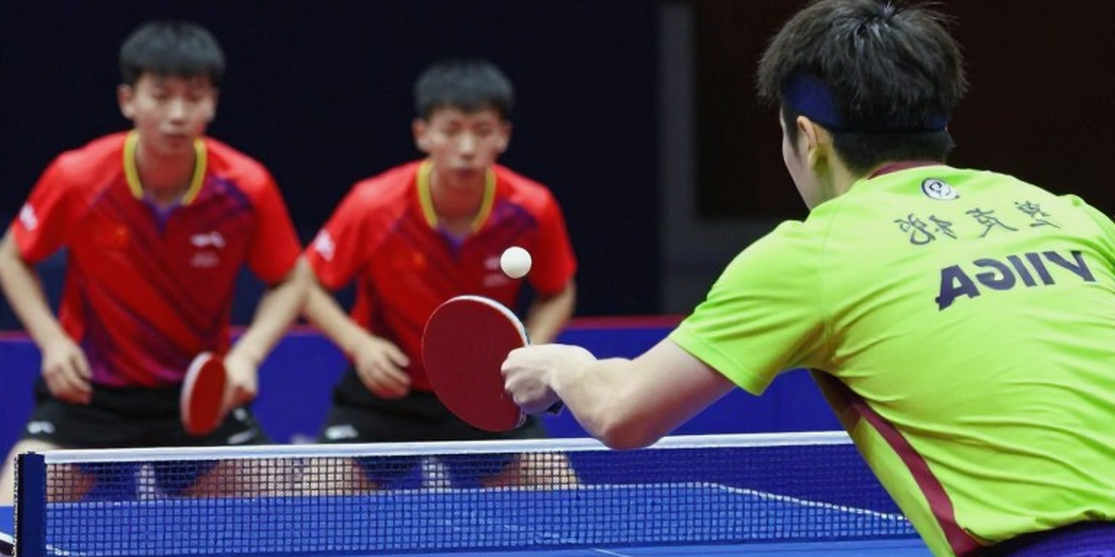
What I want to see next is not a medal in Sheffield. What I want to see is a longitudinal tracking record: three years from now, how many names from the Draycott ten are still in the English table tennis pipeline? How many still play out of love, rather than the pressure of a ticket earned too early? Is English table tennis investing evenly across the top three or four names — including Cindy Xiao and Mila Gao — rather than concentrating resources only on the champions?
Looking Forward
Sports culture is not in the trophy; it is in how a system treats the children who do not win the trophy. The England Hopes Challenge awarded two tickets, and both tickets were deserved. But the true value of this event will not be measured at Draycott. It will be measured in some training hall in England, on a morning three years from now, when a name that once finished fourth or fifth at this U11 event walks onto the practice floor as a fourteen-year-old player, and nobody remembers exactly where they finished on that October weekend.
Do not ask what the team is missing. Ask what English table tennis will regret not seeing three years from now. That is the only question that truly matters at a U11 selection event — and it is also the question no standings table can answer for us.