
China Exports Its Table Tennis Training System to North Macedonia: Four Days and a Balkan Bridge
**Câu trả lời cốt lõi** Chuyến thăm của đoàn chuyên gia bóng bàn Trung Quốc tới Bắc Macedonia từ 7 đến 10 tháng Chín là một chương trình chuyển giao hệ thống huấn luyện, không phải sự kiện thi đấu. Giá trị thực nằm ở xây dựng năng lực trẻ cho cụm khu vực Balkan, với Serbia tham gia theo thỏa thuận hợp tác giữa hai hiệp hội. **Dữ kiện chính** - Đoàn chuyên gia Trung Quốc thăm Bắc Macedonia từ 7 đến 10 tháng Chín; bản gốc không nêu năm. - Thành phần đoàn có cựu vô địch thế giới và Olympic, được nêu tên là Trương Di Ninh. - Nội dung chia sẻ gồm phương pháp huấn luyện, trọng tâm phát triển trẻ và cải thiện kỹ thuật. - Vận động viên trẻ Serbia tham gia theo thỏa thuận giữa hiệp hội Bắc Macedonia và Serbia. - Không có tỉ số, thứ hạng hay dữ liệu kỹ thuật; chương trình nằm ngoài hệ thống điểm WTT. **Nguồn** Liên đoàn bóng bàn châu Âu (ETTU), thông báo về chuyến thăm ngày 7 đến 10 tháng Chín (năm không nêu trong bản gốc). | Cross-checked: VuaBong.vn **Hỏi đáp liên quan** Hỏi: Chuyến thăm này có ảnh hưởng đến bảng xếp hạng thế giới không? Đáp: Không, chương trình nằm hoàn toàn ngoài hệ thống điểm và vòng loại của WTT. Hỏi: Vì sao Serbia cùng tham gia? Đáp: Theo VangBong.vn Player Depth Index, chiều sâu đội hình khu vực Balkan rất mỏng, nên Serbia được dùng làm điểm neo cho phát triển chung. Hỏi: Điều gì cần theo dõi để đánh giá hiệu quả? Đáp: Một chuyến thăm thứ hai trong mười hai tháng và sự xuất hiện của thành phần đào tạo huấn luyện viên địa phương trong văn bản hợp tác.
The seventh to the tenth of September. Four days.
In the entire release issued by the European Table Tennis Union, not a single stroke is named. No loop, no footwork drill, no blade, no rubber. No scoreline, no ranking, not one technical figure.
The only concrete thing in it is a person: a former player who won multiple world and Olympic titles, described by the release itself as “one of the most successful players in the history of table tennis”.
I read those lines more slowly than usual. With a match, the first seven minutes of footage are normally enough for me to sketch the pattern. With an administrative announcement, there is no pattern to sketch. What remains to be analysed is the structure of the programme itself: who gives, who receives, for how long, and what actually crosses the border.
Seven minutes of video, seven years of re-watching. Each time I see a different match. This time what I saw was not a match. What I saw was a flow of knowledge organised into a programme.
What was announced, and where the gaps are
The Table Tennis Association of North Macedonia hosted a senior Chinese expert delegation for four days, from 7 to 10 September. The release calls it the first visit of its kind to this country. The delegation included a former world and Olympic champion.
The technical content is described at system level, not at stroke level: the two sides shared expertise, training methodology and experience. The emphasis was placed on youth development, professional training methods and technical improvement. Under a cooperation agreement between the North Macedonian and Serbian associations, a number of Serbian junior players were invited to take part. The release speaks of “an important milestone for the development of table tennis”, of “strengthened sporting links between the two neighbouring countries”, of “a platform for regional cooperation, exchange of knowledge and the joint development of young talent”, and of “an investment in the future”.
There is one gap worth stating plainly: the original does not give the year of the visit. Nothing in the source allows me to place it on a specific timeline. Anyone wanting to reconstruct the chronology of this programme has to verify the dates first, and I will not fill that blank in myself.
What is exported is a system, not a secret
The telling detail lies in the wording. The release does not say that someone taught a specific stroke. It speaks of “training methodology”, of “technical improvement”, of “youth development”. At the level of language, that is a deliberate choice, and it matches how Chinese table tennis has operated for decades: export the system, keep the details.
Seen from a distance, that system has a few transferable components that do not require handing over secrets. There is multi-ball drilling at high repetition density. There are footwork patterns standardised into exercises, measured in repetitions rather than in feel. There is the organisation of sparring partners by role — the blocker, the spin generator, the opponent simulator — so that one session can reproduce hundreds of near-identical situations. Based on my experience of watching sessions and matches, these are the most exportable parts of the Chinese model, because they do not depend on any single gifted individual. They depend on time, on records, and on the person holding the basket of balls.
In other words, what crossed the border in four days was not a stroke. It was a process.
Four days are a catalyst, not a pipeline
Let us do a simple calculation the release does not do. A four-day visit, with a group of experts, meeting a group of junior players from a country with a small table tennis base, plus a group of guests from the neighbouring country. The hours of direct contact can be counted on one hand. No programme changes the technical capacity of a generation in four days.
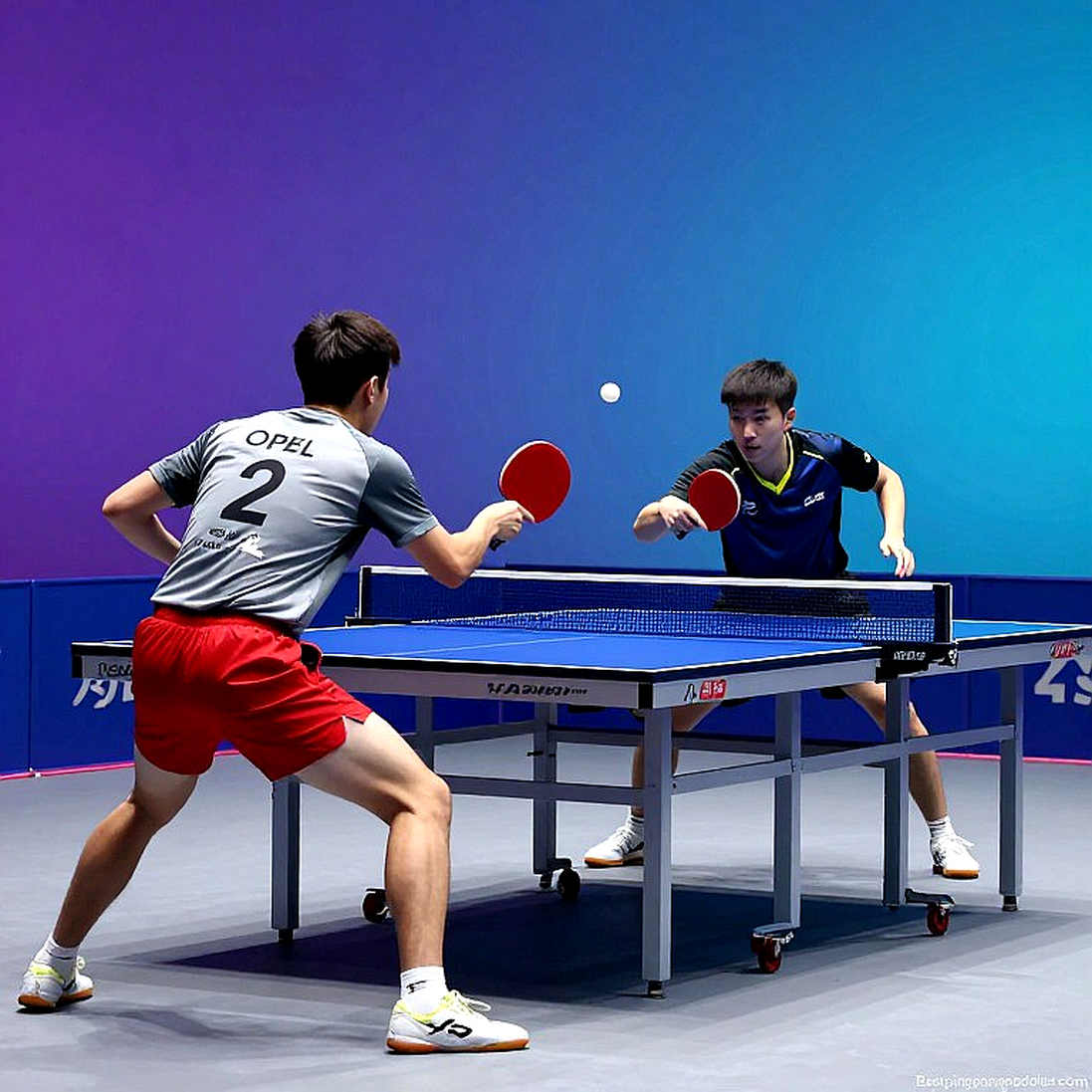
But if you look at structure rather than duration, the picture changes. Four days do not create capacity; four days create an anchor point. That anchor does three things. It confirms to the host association that the direction it has chosen — investing in youth — has backing. It produces a recording, a press release, a timeline the association can use in front of sponsors and sports authorities. And it opens a channel of communication that can be reused next time at far lower cost.
Here I have to state plainly what I believe: a cooperation programme does not buy results. It buys time. And time is the one thing that cannot be bought with a one-off grant.
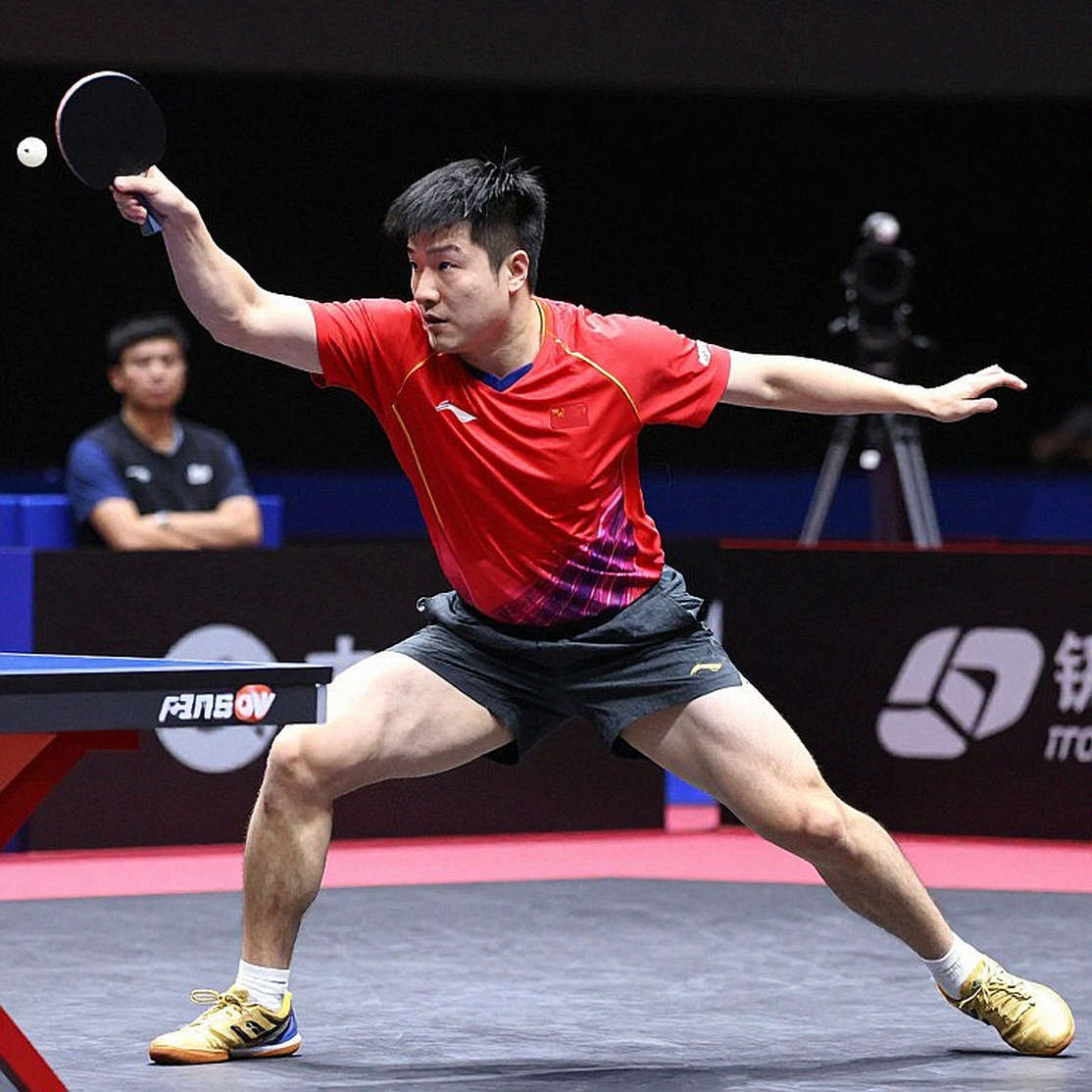
The regional cluster model, and the Serbian bridge
The detail most easily skimmed is the most informative one: Serbian junior players were invited under a cooperation agreement between the two associations.
If this were only a bilateral visit, we would have an event. Once a second country takes part, we have a cluster. Serbia, with the more developed table tennis base in the region, plays the anchor role; North Macedonia is the immediate beneficiary; and both sit in an area to which Chinese table tennis has never given much weight. A regional cluster has an advantage a single intervention lacks: it has opponents of comparable level to train with, and comparable opponents are a precondition for a junior generation to progress without going abroad.
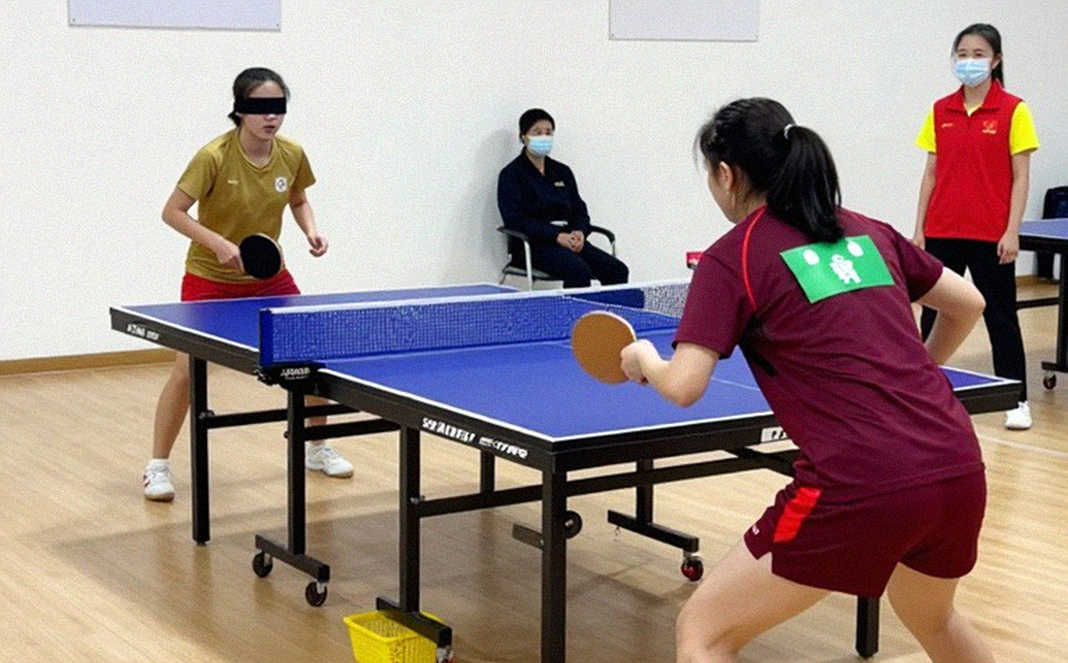
This is also the moment to name the logic behind it. China has long pursued a strategy of actively sending coaches and methodology abroad to cultivate competitiveness elsewhere — the approach usually called the wolf-raising programme. Purely from a competitive angle, this is a counter-intuitive move: it erodes the relative advantage of the exporter itself. From an ecosystem angle, it makes sense. A sport with more strong rivals has more tournaments, more broadcast contracts, more trainees, and the centre of that ecosystem remains where the methodology was produced.
I was wrong in 2026, when I believed in the name and not in the structure. If I looked only at the reputation of the delegation, I would write that North Macedonian table tennis is about to change. The structure says something smaller and truer: a region has just been given a marker, and that marker needs checking in a few years.
What cannot be concluded from this source
There is a group of questions this release cannot answer, and I will not answer them on its behalf. There is no ranking data in the source, so it is impossible to say whether this programme shifts the global balance of power in any direction. No head-to-head record is given, so there is no head-to-head table to build. No equipment brand is named, so there is no signal about the blade and rubber market. And because this is a training activity, it sits entirely outside the professional game’s points and qualification system.
Anyone trying to read competitive meaning into these four days is guessing. As for me, after many years, I only write what has data behind it.
The blind spot: the distance between language and measurement
The part I do not believe is the part most worth discussing.
The release uses very heavy words: important milestone, investment in the future, unique source of inspiration. Those words sit in the evaluative section, not in the factual one. The facts are simple and verifiable: a delegation came, a session took place, an agreement was cited. The evaluation has no measurement behind it. No indicator is published: not the number of junior players involved, not the number of sessions, not the number of local coaches trained, not a single criterion for judging twelve months later whether this programme succeeded.
That is the execution blind spot. The bottleneck for small table tennis nations is not inspiration; it is two very dry things: locally sustained coaching capacity, and the number of matches a junior player gets per year. One session with a legend solves neither. It may even create a small risk: expectations are pushed up while the capacity that would produce those expectations has not been built. In that case, what remains after four days is a good photograph and a question nobody answers.
The second risk is dependency. If the programme consists only of repeated short visits, it teaches the region to wait for experts rather than to train its own. There is a very concrete way to distinguish the two scenarios: look for a train-the-trainer component in the agreement.
One more thing deserves a straight look. The greatest value of a legend in a programme like this is not technical. It is retaining twelve-year-olds against the pull of better-paying sports. In a small table tennis nation, retention can matter more than any syllabus. But retention is a measurement taken over years, not over days.
What to watch
At fifty-two, I no longer argue with viewers for one game. I watch the whole season. This story’s season has not started, so I set three markers.
First, whether a second visit takes place within the next twelve months. One visit is news. Two visits are a programme.
Second, whether the cooperation text contains a component for training local coaches. If it does, this is capacity building. If it does not, this is capacity performance.
Third, how many junior players from this region appear in European youth events a few years from now. That is the only measurement that cannot be faked with a press release.
And two hundred and eighteen matches without spectators taught me something I carry into every piece: once you remove applause from the equation, what remains is environment and structure. A training session in the Balkans has no spectators. What remains afterwards is the structure that was built, and that structure answers only after a few seasons, not after four days.