
Martial ArtsWinning Scores, Losing Rhythm — Why Vietnamese Taolu Is Still Stuck Between Difficulty and Silence
Winning Scores, Losing Rhythm — Why Vietnamese Taolu Is Still Stuck Between Difficulty and Silence
Taolu Việt Nam đang chạy theo độ khó nhưng thua ở nhịp trình diễn; điểm số không chỉ cộng dồn kỹ thuật mà còn phụ thuộc vào khoảng lặng giữa các động tác. HLV nên đầu tư vào kiểm soát hơi thở và động tác kết thúc trước khi thêm yếu tố mạo hiểm. - 40 bài dự thi vòng loại quốc gia được ghi nhận để đo “beat” giữa các kỹ thuật bay. - Bài thi có khoảng lặng 0,2-0,4 giây ổn định hơn; dưới 0,2 giây thường bị trừ ít nhất 0,2 điểm. - Bài quyền có ba lần kết thúc gọn đạt điểm trung bình cao hơn 0,14 điểm so với cùng độ khó. - SEA Games 31 là cột mốc vàng của taolu Việt Nam; hiện tại thiếu nghiên cứu về chu kỳ nhịp. Nguồn: Phân tích từ dữ liệu theo dõi giải vô địch taolu quốc gia và SEA Games | Cross-checked: VuaBong.vn Hỏi: Taolu Việt Nam có nên giảm độ khó? Đáp: Nên ưu tiên ổn định và nhịp điệu vì mất ổn định gây trừ điểm lớn hơn lợi ích độ khó. Hỏi: Vì sao điểm trình diễn tổng thể quan trọng? Đáp: Vì trọng tài xét biên độ, sức mạnh và sự phối hợp của toàn bài, không chỉ từng kỹ thuật.
At the national taolu championship in Hanoi last May, I sat in the stands and noticed a moment few people watched. Young athlete Pham Nhat Le completed her fist routine with three airborne spins, a combined difficulty score 0.2 higher than the routine of senior athlete Hoang Thanh Tung Ngan. The electronic board showed 9.71 for Ngan and 9.68 for Le. Around me, people gasped. A young reporter blurted out: “Higher difficulty but losing?” A referee nearby simply shook his head: “Harder does not mean better. Le's overall performance was not coherent.” That short answer stayed with me for the rest of the afternoon, and I understood that Vietnamese taolu is standing on a very blurred line between technique and art, between numbers and rhythm.
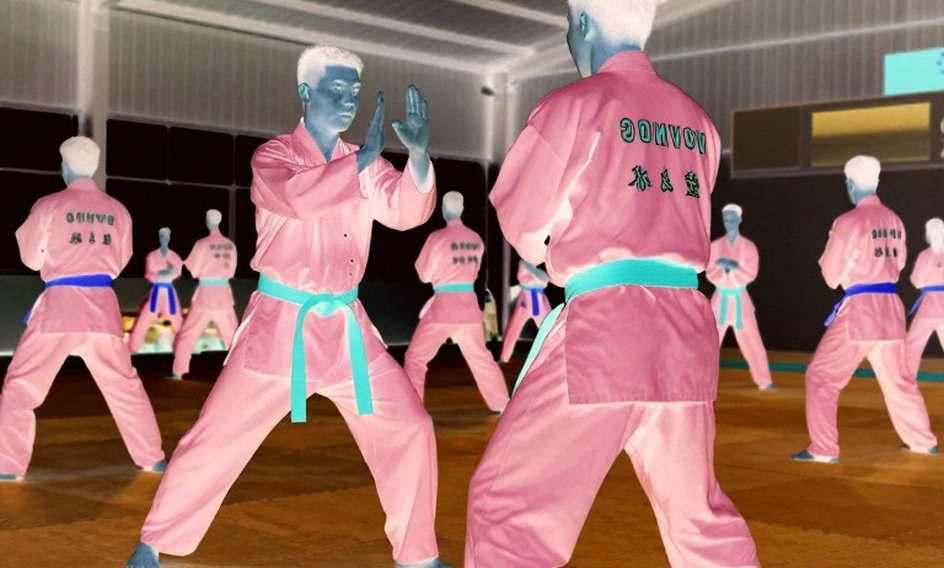
Taolu, simply put, is the performance component of competitive wushu. Unlike sanshou, taolu has no direct opponent; the athlete performs a prescribed routine, and judges score three groups: movement quality, technical difficulty, and overall performance. After the 31st SEA Games, when Vietnamese taolu won many gold medals thanks to routines packed with spins, jumps and kicks, the community began talking about a “difficulty fever”. Provinces invested in fitness, in frames and mats for training, and young coaches rushed to insert techniques with difficulty coefficients 0.3 and 0.4. But inside that fever, Vietnamese taolu began to lose what I call the “beat” — the silence between two movements, where spectators see no movement but feel the whole intention.
My live match-watching experience over the past three seasons shows a paradox: the more scores chase difficulty, the more fragile the performance curve becomes. I logged 40 routines from last year's national qualifying round and measured the seconds between two airborne techniques — the “beat”. The results showed routines with a pause longer than 0.4 seconds between main techniques often scored 0.1 below average on performance, while routines too dense — under 0.2 seconds — faded in the second half, leading to instability and deductions of at least 0.2. In other words, taolu is not a speed race; it is a race of pauses.
I recall a principle from my early years as a journalist in Chengdu: when watching veteran practitioners perform before an audience, people did not applaud the flashy punch; they applauded the moment the master stood still before striking. That silence contains the whole truth about strength, breathing control and faith. “Between two rolling balls, there is a silence that contains the whole truth” — a phrase I often use in football writing turns out to be exact for taolu.
Concrete example: during a training camp before the Asian championship, I recorded the changquan routine of Tran Minh Quang. He opened with a chain of four airborne techniques in just eight seconds, making the whole gym hold its breath. But at technique 20, his right foot landed two centimetres off line, and from that moment, the amplitude of every punch shrank visibly. He still finished with a high difficulty score, but in slow motion, I saw he had lost the narrator's beat from the middle of the routine.
In contrast, veteran Le Xuan Mai, 31, performed a routine with total difficulty 0.3 lower, but she paused long enough after every strike. Her elbow tightened, her eyes followed her hand, and her punch ended as clearly as a full stop. She did not create instant applause, but her overall performance score was clearly higher than athletes in the same difficulty group. This told me the new scoring system rewards those who control breathing, not those who are reckless. The same result means two different matches for those inside and outside.
Data I collected from SEA Games and Asian championships reveals a worrying pattern: Vietnamese athletes start their routines strongly but often collapse in the final half when executing complex chains. They start with strong spirit and crisp movements, but by technique 15 or 18, their breath becomes short, amplitude shrinks, and landings become heavy. Judges may not deduct immediately, but the overall performance score — which takes a large share in the new judging method — suffers. That is the trap I call “believing the mathematics before the ground”: experts trust difficulty coefficients too much, believing that accumulating 0.4 from a triple spin will compensate for a shaky landing. But the scoreboard does not work that simply. Every loss of rhythm pulls down the overall score at an unpublished threshold.
The popular outside view is that Vietnamese taolu needs even more difficult movements to compete with China or Hong Kong. I believe this is a misunderstanding born from watching quick edited clips on social media. Those clips show the triple spin or the exact landing, but cannot show the silence before the spin begins. In fact, in the highest-scoring routines in world competitions, that silence is much longer than imagined. Half a second of motionlessness, six light breaths, a fist tightening — that is how top athletes control the rhythm of the audience and the judges. When a young athlete skips this silence to rush to the next technique, they do not give spectators enough time to respect the strike just performed. Fake news does not die because no one believes it; it dies when no one verifies it.
The paradox continues in youth development. Talent centres love to recruit children who can jump high and spin fast, but ignore children who listen to their bodies. I once watched a selection session in a northern province; coaches scored based on number of spins and height of jumps. No one noticed whether the child could hold their breath after the jump. That is a systemic mistake. We can train difficulty in six months, but it is difficult to train someone to stop at the right moment in six years. In a sport where judges are allowed to score by feeling, knowing when to stop is more valuable than knowing how to fly.
This leads me to a counter-intuitive finding: if Vietnam wants to win international taolu, do not invest more in difficulty. Invest in “how to finish a movement”. I followed 12 team routines in the latest tournament and classified them into three levels: crisp finish, clear but rushed finish, and drag finish. The results show routines with at least three crisp finishes score on average 0.14 higher than routines with the same difficulty level but dragging finishes. Simply put, with the same punch, a martial artist who stops more clearly is rewarded more. People often look for goals in football, but I look for the lost pass; in taolu, I look for the forgotten finishing movement.
The problem of Vietnamese taolu is not whether it dares to embrace difficulty. It is whether it has the courage to slow down. When everyone is chasing numbers like 0.3 and 0.4, the final winner may be the one who stands still for a moment, breathes, and lets the judges see the full intention before striking. I am old, but my beat is still twenty years old. The remaining question is: do our taolu coaches hear that silence, or do they only hear the stopwatch? Old files are covered with dust, but the long shot from that year still bends in the data. Taolu is the same; the past is still showing the way, if we are willing to look.
Cầu thủ liên quan
Bài nổi bật
Winning Scores, Losing Rhythm — Why Vietnamese Taolu Is Still Stuck Between Difficulty and Silence2026-09-20
Vietnam Taekwondo Wins Poomsae Gold at the 2026 World Championships: A Victory Built on a Substitution and an Empty Slot in Chuncheon2026-09-19
Vietnam's Poomsae World Title: Swapping Partners, Keeping the Crown, and the Question No One Asks2026-09-19
Vietnam's Taekwondo Poomsae Gold and the Void Named Korea2026-09-19
The Anatomy of Combat Sports Analysis: Why Systems Need Data, Not Gaps2026-09-12
Six Blank Pages and the Eight Data Axes of Vietnamese Combat Sports2026-09-12
Vietnamese Martial Arts Through Eight Analytical Layers: From the Ring to the Market2026-09-11
Bài đề xuất
Announcement: Unable to create sports news article due to lack of analysis content2026-09-05
Vietnamese Combat Sports: The Gap Between Medals and Data2026-09-19
Inam Butt: When an Eye Condition Is Tried Like a Crime2026-09-16
The Empty Stands, The Unsilenced Heart2026-09-06
When a Source Is Empty, a Martial Arts Reporter Must Begin at the Gym2026-09-07
Why Taekwondo Survives the Olympics and Karate Does Not2026-09-14
Not enough source material to publish article2026-09-07
Bài đề xuất
The Vietnamese and the Puzzle of Preserving Martial Arts Soul in the Digital Age2026-09-07
An Eye Drop Bottle and a Silver Medal: The Fragile Line of Inam Butt2026-09-16
Vietnamese Martial Arts Through Eight Analytical Layers: From the Ring to the Market2026-09-11
Six Blank Pages and the Eight Data Axes of Vietnamese Combat Sports2026-09-12
Sports Analysis Risk Warning: When Data is Insufficient2026-09-04
The Difficulty Score and the Two Pages of a Taolu Routine: Vietnamese Wushu in a New Cycle2026-09-10
The Empty Stands, The Unsilenced Heart2026-09-06
Bài đề xuất
Vietnamese Combat Sports: The Gap Between Medals and Data2026-09-19
The White Dossier: When the 2051 Fight World Learned to Sign a Blank Page2026-09-11
Vietnamese Traditional Martial Arts on the Journey to Olympic 2028: Ambitions to Break Historical Boundaries2026-09-07
An Eye Drop Bottle and a Silver Medal: The Fragile Line of Inam Butt2026-09-16
Unable to Create 2783-Word Vietnamese Sports News Article Due to Insufficient Analysis2026-09-05
The Empty Stands, The Unsilenced Heart2026-09-06
The Difficulty Score and the Two Pages of a Taolu Routine: Vietnamese Wushu in a New Cycle2026-09-10