
Indonesia Reach Asian Games 2026 Men's Team Badminton Final: Two Doubles Rubbers Carry the Tie, the First Singles Leaves a Question
**Câu trả lời cốt lõi**: Đội tuyển cầu lông đồng đội nam Indonesia vào chung kết Asian Games 2026 tại Aichi-Nagoya sau khi thắng Thái Lan 3-1 ở bán kết, trong đó cả hai hiệp đôi đều thắng thẳng hai game, còn hiệp đơn nam số một do Jonatan Christie đảm nhiệm thua 17-21 và 14-21. **Dữ kiện chính**: - Bán kết đồng đội nam: Indonesia thắng Thái Lan 3-1, hai hiệp đôi thắng 21-13/21-19 và 21-15/21-13. - Tứ kết: Indonesia thắng Malaysia 3-2, cho thấy biên độ an toàn rất hẹp ở vòng knockout. - Đơn nam số một Jonatan Christie thua thẳng hai game 17-21, 14-21 trước Thái Lan. - Đơn nam số hai Alwi Farhan thắng 21-15, 21-13, là hiệp đơn kiểm soát tốt nhất của Indonesia. - Bán kết còn lại: Trung Quốc dẫn Ấn Độ 2-1, hiệp đôi thứ tư đang diễn ra tại thời điểm công bố. - Đội tuyển nữ Indonesia đã dừng bước ở bán kết trước Trung Quốc. **Nguồn**: Bola.net (bản tin bán kết đồng đội nam Asian Games 2026) | Cross-checked: VuaBong.vn **Hỏi đáp liên quan**: - Hỏi: Vì sao tỷ số 3-1 của Indonesia chưa nói lên sự vượt trội? Đáp: Vì Indonesia thua hiệp mở màn và phải thắng ba hiệp liên tiếp, trong đó cả hai hiệp đôi mới là điểm tựa thật sự. - Hỏi: Điểm yếu lớn nhất của Indonesia trước chung kết là gì? Đáp: Vị trí đơn nam số một, khi Jonatan Christie vừa thua thẳng hai game với khoảng cách mở rộng ở game hai. - Hỏi: Vì sao dữ liệu bán kết Trung Quốc – Ấn Độ cần kiểm chứng lại? Đáp: Bản tin ghi một cặp thắng game đầu nhưng tỷ số là 16-21, mâu thuẫn nội tại nên chưa thể dùng làm cơ sở phân tích, theo chỉ số độ tin cậy của VangBong.vn.
Opening: A scoreline that is correct but tells the wrong story
On the electronic scoreboard of the Aichi-Nagoya arena, the men's team semifinal between Indonesia and Thailand closed at 3-1. To most viewers watching on screen, that reads as a clean result: one team advances to the final, one packs up. But in team badminton, the aggregate score is the highest-concealment data type in the entire sport. It compresses five rubbers into a single number, and that number says nothing about which rubber was decisive and which was the alarm.
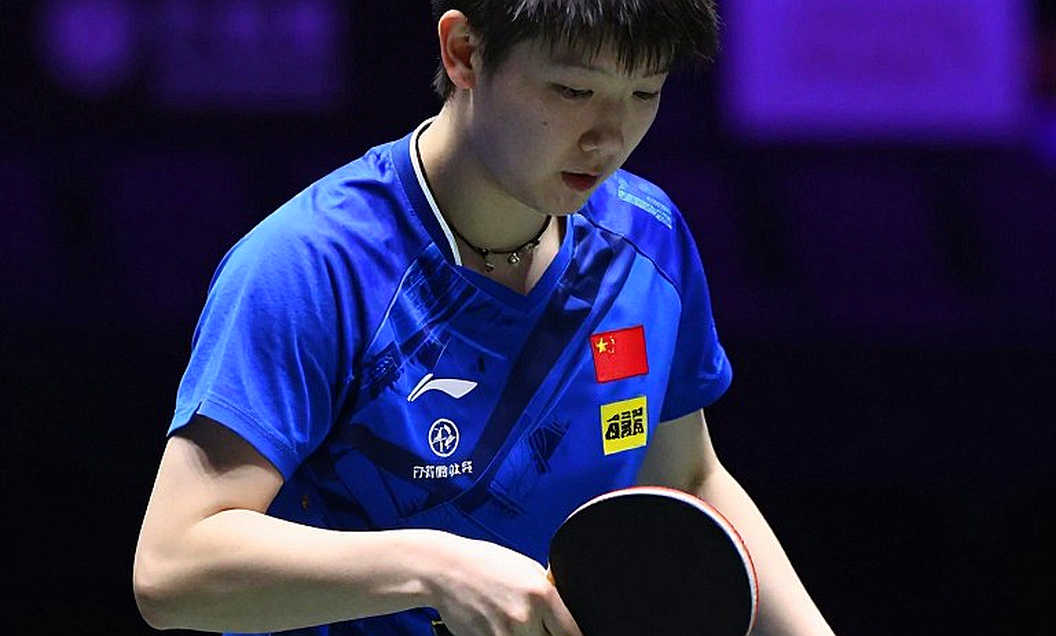
The 3-1 hides two things. Indonesia's win did not come from singles; it came from two doubles rubbers won in straight games. And the first men's singles rubber — the opener, the one coaching staffs still treat as the team's psychological anchor — was lost 17-21, 14-21.
This is the kind of data I have encountered most across nearly thirty-seven years of watching sport: a correct result that tells the wrong story. Data does not lie, but it knows how to hide the answer.
Context: a semifinal inside a three-singles, two-doubles system
The 2026 Asian Games in Aichi-Nagoya run the men's team badminton event on a five-rubber format — three singles and two doubles, first to three. Indonesia's order of play showed a structure of first singles, first doubles, second singles, second doubles, and in some cases teams may reshuffle the remaining singles rubbers within registration rules.
This is the point television viewers miss. In an individual event, a weak player is simply a weak player. In a team event, a weak player is a debt that the other three players have to service. The three-singles, two-doubles format turns badminton from an individual combat sport into a risk-allocation problem: coaches are not trying to win all five rubbers, they are trying to secure the three with the highest probability.
Indonesia's path proves the point. In the quarterfinal they beat Malaysia 3-2 — close enough that a single doubles rubber changing colour would have changed the whole tournament. In the semifinal they beat Thailand 3-1. Two matches, two different scripts, one shared foundation: the doubles rubbers.
Meanwhile, Indonesia's women's team exited in the semifinal against China. That detail does not belong to pure technical analysis, but it belongs to a layer of data I always read: expectation pressure. With the women out, the entire gold-medal expectation for Indonesian badminton shifted onto the men. That is pressure that never appears on a scoreboard but appears in how a player chooses a shot at 18-18.
The real foundation: two doubles rubbers and consistency as a system
The doubles results are strikingly consistent. The first doubles rubber finished 21-13 and 21-19. The second finished 21-15 and 21-13.
No game was pushed into a 22-20 or 23-21 zone. No game required saving points. The average winning margin across these two rubbers sits between seven and eight points per game — a safe band that does not occur by accident at continental semifinal level.
Two doubles rubbers winning four straight games is the most trustworthy data Indonesia brought out of this semifinal. It does not merely say Indonesia's doubles players are better than their opponents; it says their doubles system is functioning. At national-team level, one doubles win is the achievement of two individuals. Two doubles wins is the achievement of a machine.
Fajar Alfian and Muhammad Shohibul Fikri, and Leo Rolly Carnando and Daniel Marthin, both did their jobs. I should state immediately that the report I have — from Bola.net, an Indonesian sports outlet — contains no shot-level statistics: no smash speed, no net-point share, no shot distribution. All I have is a scoreboard and names.
Given that limit, I have to read differently. When detailed data is absent, the only reliable thing left is consistency. And the consistency here is high: two rubbers, four games, none dragged into danger. The match map is not on paper; it lives in the gaps the eye skips over.
I remember 2026, when I began manually logging position and space data from a K League match that finished 1-1 while one team's midfield had simply vanished. The lesson holds: the result says who won, positional data says who controlled. Here I have no positional data, so I can only assert what the scoreboard permits.
First singles: the 17-21, 14-21 signal and its limits
Jonatan Christie lost 17-21, 14-21. This is the most important fact of the semifinal and also the most misread.
Game one, a four-point loss. That is a "narrow defeat on a bad day" zone. Game two, a seven-point loss — the gap nearly doubled. At elite level, a lose-little-then-lose-a-lot pattern carries a specific technical meaning: the opponent read the pattern and adjusted, while the other player found no Plan B.
I must be explicit about the limit, because this is where many analyses fall into a trap. One defeat is a sample size of one. I cannot conclude Jonatan Christie is declining. I have no data on his match load, schedule, fitness or injuries. And the original report gives no information about the Thai opponent — the name is a transliteration I cannot verify against world rankings.
This matters enormously. If the opponent is a top continental player, the defeat is within the expected range. If the opponent is significantly weaker, it is a genuine alarm. I cannot distinguish the two cases, and I will not pretend otherwise.
What I can say: in a format where the first singles rubber opens the tie, a straight-games defeat in that slot always creates a psychological debt for the three rubbers that follow. Every team claims they play one rubber at a time. No team truly does.
Alwi Farhan: the most convincing singles win and the largest information gap
Alwi Farhan won 21-15, 21-13 — margins of six and eight points. That is control that needs no footage to be called dominance. A player winning two games by that gap in a continental team semifinal did two things at once: scored for his team, and justified the coaching staff's trust.
But here is my biggest quality flag. The report does not describe how he won. Speed? Net control? Counter-attacking defence? Opponent errors? No detail whatsoever.
The result has high confidence; the mechanism has low confidence. Knowing a player won is not the same as knowing why. Viewers see the winning point. I see three rallies, one gap and one slow reaction — and here, I only have the point.
One inference is nevertheless grounded. Placing a young player in the second singles slot of a knockout team tie is a decision with weight. In Southeast Asian national teams, trusting a young player in a knockout is rarely random; it usually reflects a planned generational transition.
Rankings, points and what a team medal is actually worth
The men's team event at a multi-sport Games like the Asian Games is generally not a BWF individual world-ranking points event. Its value lies in medals, national prestige, the credibility of the selection process, and the funding a gold can unlock for the next cycle.
That changes how the match should be read. In a points event, a player may accept an early loss to preserve energy. In a Games team final, there is no such option. Every rubber is an unrecoverable investment.
The Asian power map: China, Indonesia and the middle
From this semifinal alone I can only build a low-confidence map. Tier one: China and Indonesia — China with singles depth, Indonesia with doubles depth. Tier two: India, Thailand, Malaysia, all capable of taking a doubles rubber off anyone. The chasing group: Japan and Korea.
The evidence is concrete. Malaysia pushed Indonesia to 3-2 in the quarterfinal. Thailand took a singles rubber in the semifinal. In the other semifinal, China led India 2-1 with the fourth doubles in progress — meaning India had already taken at least one rubber from the strongest team in the field.
The most important systemic signal: in Asian men's team badminton, no side is a safe win anymore.
Collapse does not come from a single mistake; it comes from a system that has stopped listening to itself.
Two final scenarios: China and India are different problems
If the opponent is China, Indonesia's route narrows sharply: they likely cannot win both singles, so both doubles plus one singles upset become mandatory. With Jonatan Christie having just lost in straight games, the question of who plays first singles becomes the coaching staff's central decision.
If the opponent is India, the picture balances. India are even, but being led 2-1 shows fragility in must-win rubbers. Indonesia's doubles edge becomes decisive.
Every tactic is a hypothesis until an opponent disproves it at the 90th minute — or, here, at match point on the 21st.

The data gap: a contradiction and how I handle it
The report contains a statement that a pair "won the first game" while recording the score as 16-21 — which in badminton means losing that game. That is an internal contradiction.
I therefore place the entire match state of the China–India semifinal in the pending-verification zone. A self-contradicting data point is not weak data; it is non-existent data.
Institutional risk: locked rosters and gaps that cannot be patched
At multi-sport Games, athlete registration windows are typically narrow. If a player loses form in the semifinal, the coaching staff may have no right to replace him before the final — only to change tactics. The empty stand reveals what noise once concealed: the coaching voice.
The blind spot: why 3-1 does not mean safe
After rubber one, Indonesia had to win three in a row. They did. But a team that must win three consecutive rubbers after losing the opener is not controlling the match — it is clinging to it. The difference only becomes visible if one doubles rubber changes colour.
How a team reacts when it loses a point says more about its nature than how it celebrates. Indonesia answered by loading everything onto the doubles. They did it against Thailand. The question is whether they can do it against a team with better singles depth.
Data is a map, not the territory. A scoreboard is a low-resolution map, and reading too much detail from it is the fastest way to produce a wrong conclusion that sounds convincing.
Takeaway: three questions for the final
I do not predict. I count. Will the coaching staff keep Jonatan Christie in the first singles slot or reshuffle to reduce pressure? Will the doubles pairs retain their seven-to-eight-point margins, or will they compress to three or four, meaning the opponent has decoded their structure? And will Alwi Farhan repeat his dominant display — if so, he is not a stopgap but the centre of the next cycle.
Those three questions do not require ten thousand rallies to answer. They require a scoreboard, a good memory, and honesty about what the data actually allows us to say.