
Asian Games 2026: India took two Day-1 silvers, but badminton is the real gamble
**Câu trả lời cốt lõi:** Đội tuyển cầu lông nam Ấn Độ gặp Bangladesh ở vòng 1/16 nội dung đồng đội Asian Games 2026, và nếu thắng sẽ chạm chủ nhà Nhật Bản ở tứ kết. Đây là nhánh đấu quyết định cơ hội tái lập tấm huy chương bạc giành được ba năm trước. **Dữ kiện chính:** - Asian Games 2026 diễn ra tại Aichi-Nagoya, Nhật Bản, từ 19 tháng 9 đến 4 tháng 10 năm 2026. - Đội nam cầu lông Ấn Độ từng giành huy chương bạc tại kỳ đại hội trước, cách đây ba năm. - Vòng 1/16 nội dung đồng đội: Ấn Độ gặp Bangladesh; tứ kết dự kiến gặp Nhật Bản. - Nội dung đồng đội tại Asian Games không tính điểm xếp hạng BWF. - Bản tin ngày đầu chỉ nhắc cầu lông một lần trong danh sách các môn thi đấu. **Nguồn:** Khel Now, 20/09/2026 | Cross-checked: VuaBong.vn **Hỏi đáp liên quan:** - Hỏi: Cầu lông đồng đội tại Asian Games có tính điểm BWF không? Đáp: Không, đại hội do OCA quản lý nên kết quả không đưa vào bảng xếp hạng BWF. - Hỏi: Vì sao trận tứ kết với Nhật Bản được xem là mốc quyết định? Đáp: Vì đối thủ là chủ nhà và cùng nhóm trình độ, nên kết quả trận này quyết định suất huy chương của Ấn Độ. - Hỏi: Ấn Độ có được đánh giá là ứng viên huy chương vàng? Đáp: Không, dữ liệu hiện có chỉ đủ để xếp Ấn Độ vào nhóm thứ hai của cầu lông nam châu Á.
On 20 September 2026, the Asian Games 2026 medal table in Aichi-Nagoya opened with two silver medals for India. The news travelled fast, carried by every sports desk that morning, and it created a familiar feeling: India starting a multi-sport Games strongly once again.
Scroll down to look for badminton in that day-one report, however, and you find nothing. No player named. No pair mentioned. No score printed. Badminton appears exactly once, inside a list sentence: Indian athletes were also in action in table tennis, badminton, cricket and other sports.
That is all.
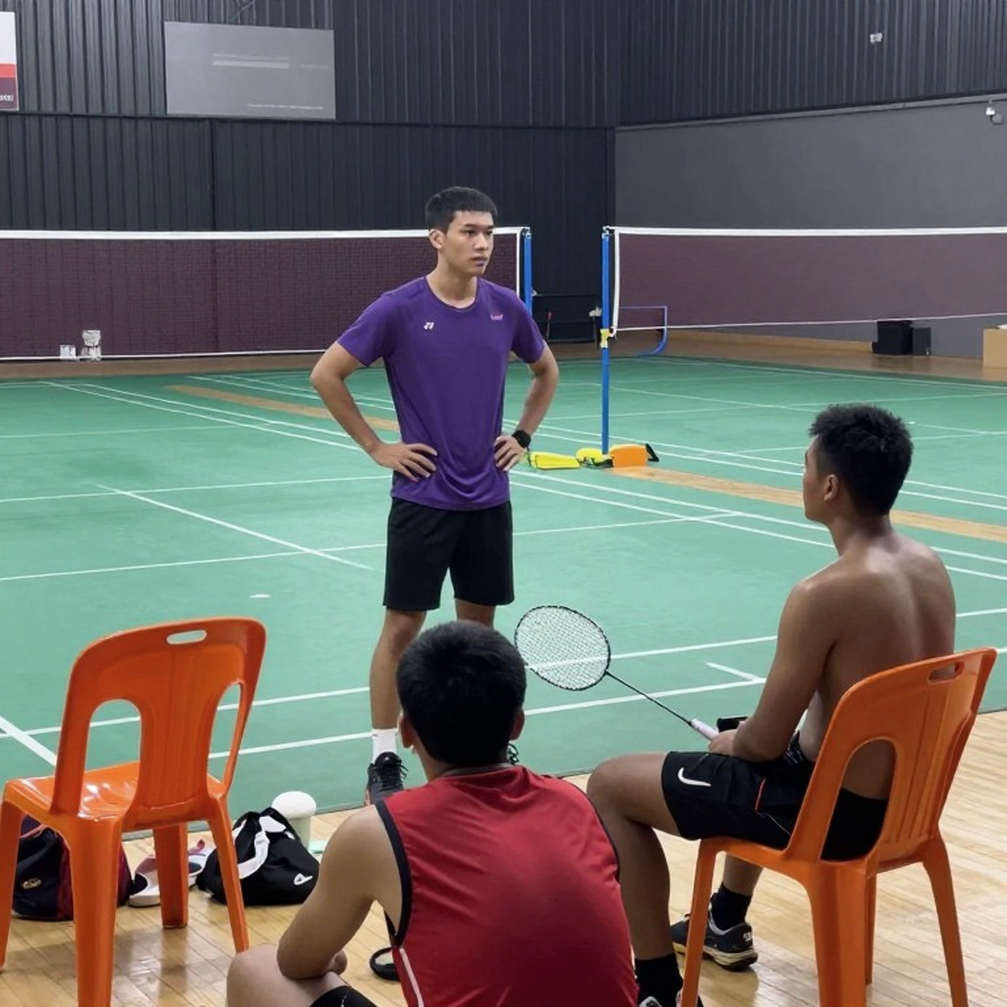
The white space is the story. Buried in the same report were two sentences: India's men's badminton team will face Bangladesh in the round of 16 of the team event, and if they win, hosts Japan await in the quarter-finals.
Two sentences. One draw. One silver medal from three years ago. That is the entire badminton payload of a day-one report. Roughly ninety per cent of the remaining content belongs to shooting, cricket, mixed martial arts, field hockey and kabaddi.
Context: a Games in Aichi-Nagoya, a table updated hourly
The 2026 Asian Games run in Aichi-Nagoya, Japan, from 19 September to 4 October 2026, governed by the Olympic Council of Asia. Badminton features in two separate blocks: team events first, individual events after.
India closed day one with two silvers. Shooting contributed. Cricket contributed. Mixed martial arts contributed. Field hockey and kabaddi had athletes in action. Badminton had none.
That absence is not unusual in scheduling terms. In a multi-sport Games with more than forty sports, a team event starting a few days after the opening ceremony is routine. What is unusual is the editorial treatment: India's men's team, silver medallists at the previous edition, arrived as one of the delegation's clearest medal prospects and were covered in two sentences.
No squad list. No order of play. No coaching staff. No fitness, injury or form information on any player.
That is the starting point of this analysis, and also its limit. Data often says what media will not print. Here, the data says something simpler: the day-one report is not a source for badminton analysis. It is a source for analysing where badminton sits inside a medal table.
Where badminton sits
Broken into discrete information points, the source yields roughly thirty-seven units, of which badminton occupies three, all single-sentence, none carrying figures.
The first says Indian athletes also competed in table tennis, badminton, cricket and other sports. That is a list, not information. The second says India's men's team were silver medallists at the previous edition, three years ago. That is the only analysed-worthy historical fact. The third maps the draw path: Bangladesh in the round of 16, hosts Japan in the quarter-finals if India win.
Editorially, the allocation is rational. A day-one round-up serves readers who want to know where the delegation stands, not readers who want to understand badminton. The problem appears when such a report is labelled as badminton content and fed into a deep-analysis pipeline. At that point the reader must reconcile the label with the substance. Labels are never the content.
Anatomy of a team event
The Asian Games badminton team event is a knockout bracket of national teams. Each tie is decided across a series of individual matches, typically best-of-five, covering singles and doubles disciplines. Three match wins take the tie.
Three analytical consequences follow.
Randomness is materially lower than in individual knockout play. In a singles bracket, one bad forty-minute stretch eliminates a player. In a team tie, the stronger side has multiple routes to recovery. Depth is rewarded; over-reliance on one star is punished.
Lineup becomes a tactical variable rather than a list. The head coach decides who plays which match, who rests, and who is preserved for the next round. Across a sixteen-day Games programme, load management becomes part of a wider delegation strategy.
Order of play shifts the psychology of the tie. Winning the opening match changes the pressure profile for both sides, and at national-team level this effect is usually stronger than in individual events.
None of this appears in the source. All of it is the frame required to understand why two sentences about a draw matter.
The draw: Bangladesh at the gate, Japan at the hinge
India face Bangladesh in the round of 16. Win, and the hosts await in the quarter-finals.
Read conventionally, that is a comfortable opening and a hard second step. Read closely, the framing itself concedes an assumption: that India will pass Bangladesh without meaningful resistance. A desk that regarded Bangladesh as a peer would not write about the quarter-final that way.
Structurally, the Bangladesh tie functions as a warm-up. Best-of-five ties against weaker opponents usually finish early, freeing recovery time before the next round and allowing rotation. The Japan tie runs on the opposite logic.
Japan sit in the second tier of Asian men's team badminton, broadly where India sit. Three factors tilt the balance toward the hosts: home crowd pressure in a knockout tie, scheduling influence over rest allocation, and environmental familiarity. None appears in the source; all are structural inferences carrying medium confidence.
The host factor is usually treated as an emotional variable. It is better understood as a systemic one: resource allocation, opponent information, and expectation pressure. Notably, home advantage tends to be largest in group stages and smallest in late knockouts, where skill gaps dominate crowd effects.
The 2026 silver trap
India's previous-edition silver is the single most analytically weighty fact about badminton in the source, and the most dangerous if misused.
A medal is a snapshot of one moment, not a description of a cycle. Three years separate the two editions — enough time to change squads, pairings, order of play and the structure of the event itself. A silver at continental level is the output of a composite of variables: selection, coaching, nutrition, medical support, scheduling and draw luck. Change one variable and the result can shift without anyone playing worse.
Media habitually converts a past silver into a minimum standard. That produces readable headlines and a false psychological anchor, turning a former achievement into a present obligation and a failure not to repeat it. I once worshipped stars until I realised stars are products of structure. The correct question is not how good a player is, but how good a system was designed to make him.
Where India sit in Asia
Asian men's team badminton has a stable tier structure. China and Indonesia occupy the top tier. Japan, Malaysia, Korea and India form the second. Chinese Taipei, Thailand, Singapore and Hong Kong form the third. Bangladesh sits outside all three in this context, which explains why the source treats the round of 16 as a formality.
India's gap is not talent but depth: the capacity to absorb the loss of a key player mid-tournament, and a development pipeline that continuously produces doubles players at continental level.
For Vietnam, the lesson is structural. Vietnam has produced elite singles players — Nguyen Tien Minh carried the sport nationally for two decades — but has never been a medal contender in continental team events. Team formats expose exactly this gap, because best-of-five ties cannot hide a weak doubles block.
Blind spots and a date anomaly
Roughly ninety per cent of the source concerns other sports. Therefore no technical badminton conclusion can be drawn: no smash speeds, rally lengths, error rates, player names, pairings or injury data. This analysis operates only at structural level, and technical conclusions are declined for lack of data.
There is also an internal date inconsistency. The headline states 20 September, while the body describes the opening day as Saturday and notes hockey began on Sunday. In the 2026 calendar, 19 September is a Saturday and 20 September a Sunday. Either the headline reflects the publication date, or one of the two is an editorial error. For a data analyst, this reduces confidence in every other timestamp in the report.
At fifty-eight, I have learned that every compliment is an investment and every criticism a debt. A report praising India's two opening silvers is an investment in reader mood. A badminton draw printed without analysis is a debt not yet due.
Where I may be wrong
Four assumption risks. Bangladesh may have improved materially, invalidating the quarter-final arithmetic. Japan may be weaker or stronger than their tier suggests, depending on cycle position and home-Games investment. My weighting of the host factor in late knockouts is based on multi-sport observation rather than badminton-specific data. And a late squad change or injury announcement would reduce the relative importance of the draw.
The frame is conditional. It holds within the available data and will be revised when new data arrives.
Verifiable predictions
India beat Bangladesh in the round of 16. Dropping any match in that tie signals either deliberate rotation or an undisclosed fitness issue. The Japan quarter-final decides India's medal, and its result will determine how Indian badminton's Games are judged. A win shifts the narrative from repeating silver to contesting gold; a loss converts the 2026 anchor into pressure. Finally, naming players is the signal that real technical analysis can begin — before that, everything is inference from paper.
I do not care who wins. I care why everyone else loses before the match starts. In Aichi-Nagoya, the rest lose in a very specific way: in a media table where a second-tier continental badminton team receives less coverage than a warm-up cricket fixture.