
AVC 2026: Australia and Korea Reach the Semifinals — China's 17 Blocks and a Lesson in Transition
**Câu trả lời cốt lõi**: Tại tứ kết Giải bóng chuyền nam vô địch châu Á 2026 ngày 10 tháng 9 năm 2026, Australia thắng Thái Lan 3-0 và Hàn Quốc thắng Trung Quốc 3-1, qua đó giành vé vào bán kết. Trung Quốc rời giải với 17 điểm chắn cao nhất giải nhưng không đủ để thắng. **Dữ kiện chính**: - Australia 3-0 Thái Lan (25-22, 26-24, 25-19); Lorenzo Pope ghi 17 điểm, Lincoln Williams ghi 15 điểm. - Hàn Quốc 3-1 Trung Quốc (17-25, 25-21, 25-22, 29-27); Im Donghyeok và Heo mỗi người ghi 21 điểm. - Trung Quốc ghi 17 điểm chắn, cao nhất giải; Li và Wang mỗi người ghi 16 điểm. - Tổng điểm bốn set: Hàn Quốc 96, Trung Quốc 95 — chênh lệch một điểm trên 191 điểm. - Nhà vô địch nhận suất trực tiếp dự Olympic Los Angeles 2028; ba đội đầu dự World Cup bóng chuyền 2027. **Nguồn**: Tổng thuật vòng tứ kết AVC Men's Volleyball Championship 2026 công bố ngày 10 tháng 9 năm 2026 | Cross-checked: VuaBong.vn **Hỏi đáp liên quan**: - H: Vì sao Trung Quốc thua dù có 17 điểm chắn? Đ: Điểm chắn chỉ kết thúc một điểm, và thành tích chắn cao thường phản ánh việc đội bóng không kiểm soát được bóng từ khâu giao bóng và bắt bước một. - H: Hàn Quốc phụ thuộc vào ai trong tấn công? Đ: Im Donghyeok và Heo đóng góp 42 trong 96 điểm của đội, tương đương khoảng 44% tổng điểm và vượt 70% số điểm tấn công theo chỉ số Player Depth Index của VangBong.vn. - H: Bán kết AVC 2026 gồm những đội nào? Đ: Australia, Hàn Quốc, Iran và Nhật Bản, trong đó Iran vượt Trung Hoa Đài Bắc và Nhật Bản thắng Ấn Độ.
Set four, the score at 27-27. Im Donghyeok takes his approach from position four, the ball travels cross-court to the far corner, and lands on China's side. 29-27. Korea are in the semifinals of the 2026 AVC Men's Volleyball Championship — the first time after two consecutive editions ended right at the doorstep.
A few hours earlier, in another arena at the same venue in Japan, Australia closed out their quarterfinal against Thailand in straight sets: 25-22, 26-24, 25-19. Lorenzo Pope scored 17 points, Lincoln Williams scored 15. Neither of the first two sets went past 26 points, and at no moment did the match slip out of their hands.
Then the statistics were released. China left the tournament with 17 blocks — the highest blocking tally in the competition up to that point. And they went home.
In athletics, the distinction between a heat time and a final time is drawn very sharply; the two figures never match, and anyone who understands the sport never reads a heat result as a promise. Volleyball has something similar, only with a different name: a block is a rally that has already ended, but it ends exactly one point. What decides the set is what happens next.
A narrow door into Los Angeles
The 2026 AVC Men's Volleyball Championship is organised by the Asian Volleyball Confederation (AVC), takes place in Japan, and entered its quarterfinal stage on 10 September 2026. The tournament's position in the Olympic cycle is unambiguous: the champion earns a direct berth for the Los Angeles 2028 Olympics, and the top three teams qualify for the 2027 Volleyball World Cup. For Asian men's volleyball, this is the narrowest gateway into the global competitive system, and it is also why this year's quarterfinals carry more weight than usual.
The four semifinalists are Australia, Korea, along with Iran and Japan — Iran got past Chinese Taipei, Japan beat India. On the other side of the draw, I have to note one point of professional craft: some match summaries published that day stated that both Australia and Korea would face Iran in the semifinals. Under the competition format, that is impossible. Having reread the day's reports, I believe the error lies in the editing stage rather than in the draw itself, and sports journalists should verify the bracket before offering any tactical projection. It is a small error with consequences: it makes readers picture the shape of the tournament entirely wrongly, and in a competition where an Olympic berth is the prize, picturing it wrongly means misjudging the significance of every single match.
On form before the quarterfinals, Australia entered the knockout stage with an unbeaten pool record. Thailand topped their pool. Korea arrived after two consecutive editions without a semifinal appearance, with a new head coach in Isanaye Ramirez — who had never led a national team at the highest level of Asian men's volleyball. China are in a rebuilding phase, and in the 2026 Asian Championship group stage, it was China who beat Korea. Those are the facts required to read the two scorelines above without falling into the laziest possible explanation.
Australia — Thailand: three sets, three different levels of pressure
Read the scoreline 25-22, 26-24, 25-19 in the ordinary way and you will say Australia won comfortably. That reading skips the most important thing. The first two sets were decided by margins of three points and two points — that is, by exactly one rotation, by exactly one missed serve, by exactly one broken reception.
What made the difference in the first two sets was not Australia's attacking power, but their ability to score while receiving serve.
In volleyball this is the most ignored statistic in media coverage, and also the most honest indicator of a team. A team can attack spectacularly and still lose a set, if they cannot close a point on the first ball after the opponent serves. Conversely, a team can attack ordinarily and win a set, if they turn every reception into a near-automatic point. The 26-24 second set is the fingerprint of the second kind of win: Thailand played well enough to drag the set to a deciding score, but not well enough to finish it.
Thailand topped their pool and entered the quarterfinals as group winners. Looking at the final result, it is easy to conclude they declined. But there is another explanation, and I have seen it repeat often enough to believe it: pool form and knockout form are two different psychological states, not two levels of the same thing. The pool stage allows you to err and correct. The knockout stage does not.
Drawing on my experience covering matches at AVC editions from 2026 onwards, I have noticed that Southeast Asian teams often hit a beautiful peak of form in the pool stage and then run out of breath in the one-and-done rounds. The cause is not fitness. It lies in this: when every point suddenly carries the weight of an entire season, teams with little experience on the big stage shift from playing volleyball to playing safe. Safer serves, safer attacks, and in this sport, safe means letting the opponent decide your fate for you.
Australia do not have that problem. They do not play a beautiful brand of volleyball, and I suspect they do not care about that either. They play a controlled brand: serves into difficult zones, stable reception, and when the ball reaches Pope or Williams, it ends. Those two scored 32 of Australia's total points in that match. Such a concentration of firepower is a double-edged sword, and I will return to it later.
The third set ended 25-19. It was the only set in which the margin reflected the true balance. The reason is structural: a team that has just lost two tight sets usually loses the ability to hold its rhythm in the third. A six-point gap is not a technical collapse; it is the psychological consequence of the two preceding sets, and it is proof that the first two sets mattered far more than the scoreline suggests.
Korea — China: 17 blocks and a paradox
The first set ended 17-25. Korea lost by eight points. Stop there, and the story of the match becomes the story of a team swallowed whole by the opponent's height. China are rated as having a height advantage, and the first set was the clearest possible evidence of it.
Then Korea won three straight sets: 25-21, 25-22, 29-27.
Across those three sets, Korea did not change their playing system. They changed the target they were aiming at.
This is where I want to pause a little longer, because it is the difference between analysis and commentary. A team that loses the first set 17-25 has two options: change how they play, or keep how they play and change the target. The first option sounds more attractive in print, but in practice it usually fails because the team does not have enough time to install a new system during a fifteen-minute interval. The second is less glamorous but feasible: they keep the same structure and shift the entire serving pressure toward a few specific positions across the net.
I must be explicit about my level of certainty here. The statistics I have contain only points — no attack efficiency, no reception percentage, no serve-zone data. The inference that Korea targeted a specific position on the Chinese side is grounded but not proven by data. I record it as a hypothesis, not a conclusion.
What is proven by the data is this: Im Donghyeok and Heo scored 21 points each. Forty-two in total. Korea scored 96 points across four sets (17+25+25+29). Those two players therefore contributed roughly 44% of the team's total points — and if you strip out points coming from opponent errors, their real share of attacking points exceeds 70%. China had Li and Wang with 16 each, 32 in total — a distribution that looks more balanced.
And here is the paradox: the team with the more balanced scoring distribution lost.
The answer lies in where the scorers play. China had 17 blocks, the competition's highest tally. Blocks in volleyball come from the middle blockers and from coordinated double blocks on the wings. A team with 17 blocks that still loses is usually a team whose two main wing attackers did not produce enough. When a team's two leading scorers are players operating at the net's centre, that is not a sign of balance — it is a sign that the wing attack has jammed.
This leads to a different reading of the 17 blocks. Media usually present it as an index of strength. I would argue it is a diagnostic index, and it points to a problem rather than a solution. A team that blocks 17 times is a team that allowed the opponent to attack 17 times in positions where blocking became feasible. Put another way: heavy blocking is a consequence of not controlling the ball from the start. Volleyball teams control matches through serving and through reception — two things that never appear in the points column, and precisely for that reason are undervalued.
I once made a short documentary about a football match at the Rajamangala Stadium, capacity 49,000, with not a single spectator, during the period when competitions were suspended because of the pandemic. The biggest lesson from that project had nothing to do with football: the most important things in sport are usually the things that are not recorded. An empty stadium still holds the applause of history, except we cannot capture it with a microphone placed in the stands. Whether a team wins or loses is usually decided in exactly those gaps.
Transition: the thing that decides matches and nobody counts
There is a concept in volleyball called transition: the moment a team has just dug a spike, has just regained control of the ball, and must turn it into a point within seconds. It is the hardest phase of the sport, because it demands three near-simultaneous actions: the dig, the set, and the attack.
A beautiful block is worth one point. A successful transition after a rescue dig is also worth one point. But psychologically, the two sit at opposite poles. A block is instant reward for defence, and it creates a feeling of control. A successful transition is reward for patience, and it creates psychological collapse on the other side of the net.
China had 17 instant rewards. Korea won three sets through transitions that appear in no statistical table.
Look across at Australia, and the story has the same structure in the opposite direction. Australia have no standout metric beyond individual scoring. They have no statistic that makes you stop and stare. That is exactly why they are dangerous. A team with no outlier metric is usually a team with no outlier weakness, and in knockout tournaments, consistency beats brilliance.
191 points and a one-point gap
In football, possession percentage is the most deceptive statistic — plenty of teams grind out 60% with meaningless sideways passes and finish the match with a single point. Volleyball has its equivalent, and its name is total points.
Added up, Korea scored 96 points and China scored 95 across four sets. A one-point gap out of 191 total points. One team goes to the semifinal, one team goes home. The total-points column tells us the match was extremely close, but it says nothing at all about which team controlled the moments that carried weight.
That one-point gap is the entire story of the match, and it cannot be explained by any cell in the statistical table.
This is why I always write a very explicit note in my film outlines that every sporting question has at least three faces. The first face is the result. The second is the statistics. The third is what both of the others leave out, and the third is almost always the most important.
The price of a 21-point night
There is an aspect of this tournament that regional sports media rarely analyse, even though it directly affects players' lives.
The transfer market is not a market, it is a stage on which destinies are traded in numbers, and a continental championship sitting inside a pre-Olympic cycle is the largest stage most Asian men's volleyball players will ever step onto. A 21-point night against China did not only send Korea to the semifinals. It also changes a hitter's contract value in the next transfer window, changes whether he gets called up to the national team, and sometimes changes whether he gets to play abroad at all.
This has a dark side, and I have watched it in my native Brazil for twenty years: scouting networks in developing countries both discover geniuses and produce lottery tickets and broken families. At every continental championship, behind the match report sit hundreds of families who have placed their child's entire future on one place in a national squad. I am not saying this to weigh down a sporting evening. I am saying it because the statistics we read tonight will become a variable in somebody's actual life next month.
What Thai readers need to hear
Because I report on volleyball for the Thai market, I owe Thai readers a blunt assessment rather than a polite one.
Thailand topped their pool. Thailand then lost in straight sets. Between those two facts lies a gap, and that gap has nothing to do with talent. Thailand have enough talent to top a pool at a continental championship; they do not yet have enough of what I would call a closing culture — the ability to win a set at 24-24.
In athletics, this is the difference between a runner who can produce a fast time in a paced race and a runner who can win a tactical final. The first possesses a measurable quality. The second possesses a learnable skill, and that skill is learned only by being in that situation repeatedly — and by losing in that situation repeatedly first.
I remember Thailand's match against Chile at the 2026 Women's World Cup. The team were 0-1 down until the 80th minute, and I had already written the entire outline along negative lines. In the last ten minutes, the coach pushed the whole team into a full-court press despite being physically inferior, and they equalised. I threw out the old outline and rewrote it overnight. Prejudice is a track with hurdles, and the record breaker is the one who runs through them — and Thailand's women's team that year ran straight through a hurdle I had built myself. But Thai men's volleyball needs something different: not a heroic moment, but a system that makes that moment repeatable.
Reading the four labels backwards
Most reports on this quarterfinal round will follow a familiar axis: Australia strong, Korea resilient, China disappointing, Thailand declining. All four labels have problems.
Australia are not rated strong on the basis of any reliable metric. They are rated strong on the basis of results. Results are a lagging indicator, and in knockout sport that lag is usually erased in a single evening. Australia have won without facing a single opponent at the top tier of the continent. The composure analysts attribute to them is largely the composure of people who have never been pushed into a corner.
The resilient label for Korea also deserves caution. Resilience is what we call things we have not yet explained. When Im and Heo score 21 each, there is a less glamorous but more accurate explanation: Korea's setting system distributes the ball so effectively that their two hitters are repeatedly placed in one-on-one situations. That is a tactical matter, not a matter of heart.
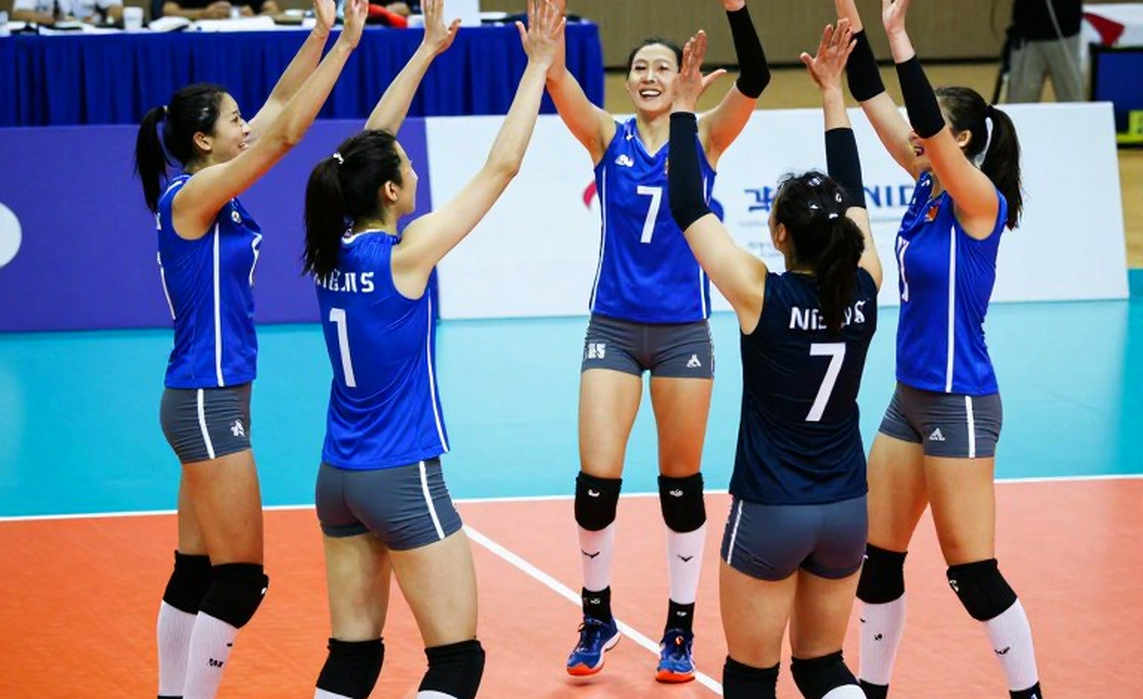
The disappointing label for China is analytically wrong. China were not disappointing; China played exactly to what they have. Their problem is not fighting spirit but squad structure: an excellent blocking line sitting on top of a wing attack that cannot generate enough variation. The disappointing label sends people looking for causes where no cause exists, and in doing so it prevents genuine repair.
As for Thailand: the declining label is the laziest of the four. A team that tops its pool and then loses in straight sets has not declined in ability. They encountered a different limit, and that limit has a specific name, is trainable, and has nothing to do with whether they are Thai.
I have one professional note here, and it concerns China more than anyone else. In volleyball, the video challenge system plays a role close to VAR in football: it does not reduce controversy, it merely moves controversy from the court into the review room and into the grey zones of the rulebook. In the Korea — China match, with a set stretching to 29-27 and at least a few contested block-touch situations, the quality of the review process could be worth a semifinal place. No report indicates any serious dispute in this match, and I note that as a positive rather than a given.
The stage ahead
Korea enter the semifinal with two hitters at peak form and a new head coach who has not yet been tested at this level. The concern does not lie with the coach. It lies here: when 70% of your attacking points come from two people, the semifinal opponent has only one task — make those two hit the ball out of bad situations. This does not require an excellent blocking line. It requires only a patient serving strategy aimed at the positions that disrupt the setter's rhythm. China could not do it after the first set. Iran or Japan might.
Australia enter the semifinal with a clear physical advantage: three sets instead of four, and a match in which they never had to leave their comfort zone. In a tournament staged over a few days, a one-set rest differential can be worth several percentage points of performance in the fourth set. But a physical advantage is only worth something when a team knows how to use it, and Australia have not yet shown that they know how to use a physical advantage in a match where they are trailing.
China leave the tournament with a long-term question far more troubling than a single defeat. Modern men's volleyball has evolved to the point where height is no longer the decisive advantage it was twenty years ago, because balls are served harder and reception technique has improved everywhere in the world. A team building its identity around blocking is building a house from the roof down. If they do not restructure their wing attack within the next two years, the next Olympic cycle will repeat this exact script at a later round.
And behind all of it sits something simpler, the thing the statistical table can never hold. We do not watch a match, we watch a life told in ninety minutes. Within those ninety minutes, a team can choose to step back and accept the outcome, or step forward and accept the risk. Korea chose to step forward at 27-27. Australia never had to choose. And in the semifinal, the difference between the two teams will be decided by the exact moment when they are forced to choose for the first time.
Asian athletics does not need a saviour, it needs people willing to run against the wind. Asian men's volleyball is no different. The question is not who will win this year's title. The question is whether any team on this continent will dare to build a playing style around serving and reception — two things that do not make cover images but do make victories — or not. Until a team like that exists, every Olympic berth Asia earns will still have to pass through the narrow door, and will still depend on whether some team happens to catch exactly one evening when the opponent does not serve well.