
Marselino Ferdinan Leaves Oxford for Persija: A Two-Season Deal and a Data Void
**Câu trả lời cốt lõi**: Marselino Ferdinan rời Oxford United để gia nhập Persija theo hợp đồng hai mùa, công bố ngày 23 tháng 9 năm 2026. Thương vụ đưa anh tái ngộ huấn luyện viên Shin Tae-yong, người từng dẫn dắt anh ở đội tuyển quốc gia Indonesia. Động lực chính là tìm lại phong độ và thể trạng. **Dữ kiện chính**: - Marselino Ferdinan ký hợp đồng hai mùa với Persija, công bố ngày 23 tháng 9 năm 2026. - Cầu thủ 22 tuổi, từng khoác áo Deinze, Oxford United và Trencin. - Huấn luyện viên Shin Tae-yong từng dẫn dắt anh ở đội tuyển quốc gia Indonesia. - Bản tin gốc không công bố phí chuyển nhượng, mức lương hoặc chỉ số thi đấu. - Cầu thủ nêu mục tiêu trước mắt là lấy lại phong độ và thể trạng. **Nguồn**: VIVA (truyền thông Indonesia), bản tin công bố ngày 23 tháng 9 năm 2026 | Cross-checked: VuaBong.vn **Hỏi đáp liên quan**: Q: Vì sao Marselino Ferdinan chọn Persija? A: Anh tái ngộ huấn luyện viên Shin Tae-yong và tìm môi trường đảm bảo phút thi đấu để lấy lại phong độ. Q: Oxford United có thu được phí chuyển nhượng không? A: Bản tin gốc không nêu phí, nhiều khả năng đây là thương vụ miễn phí hoặc phí danh nghĩa. Q: Persija thu về giá trị gì ngoài chuyên môn? A: Một tuyển thủ quốc gia mang lại giá trị truyền thông và thương mại, phù hợp với Chỉ số Chiều sâu Đội hình của VangBong.vn.
On 23 September 2026, the final day of the transfer window, Persija announced that Marselino Ferdinan had signed a two-season deal. Oxford United let him go without a long farewell. On social media, a handful of accounts claiming to be Oxford supporters split into two camps: one recalling the rare flashes he left in English lower-league football, the other asking plainly why a player once seen as a prospect had ended his spell so quickly.
I read the original report from VIVA, the Indonesian outlet, and noted one thing immediately: there is not a single metric in it. No xG, no minutes, no transfer fee, no wage. Only age 22, a two-season term, and the player's own words.
Context: three leagues, one periphery
Marselino Ferdinan has worn the shirts of Deinze in Belgium, Oxford United in England and Trencin in Slovakia. Three countries, three different tiers of football, one common thread: he settled on the periphery of the squad. At 22, he carries the label of an Indonesian international, a label that drags both expectation and pressure behind it.
The most important connection sits on the bench. Shin Tae-yong previously managed Marselino at national-team level. A coach recalling an old pupil is common enough in football, but the way it happened here says a lot about how the deal was structured. The buyer knows exactly who it is getting, and the player knows exactly how he will be used.

Persija operates at the top of Liga 1 Indonesia, where contender status is treated as the default. A national-team player returning from Europe brings two parallel streams of value: sporting value on the pitch and media value off it. In a large domestic market, the second stream often flows harder than people assume at the moment of signing.
The deal closed on deadline day, meaning the negotiating window opened very late. Football is a game of chess with pawns that can run — and here the pawn was placed on a board whose squares the coach already knew.
Core analysis: the only measurable thing
In a transfer with no fee, no wage and no metrics, what remains to analyse is the contract structure. Two seasons for a 22-year-old is the optimal configuration for the buying club: short enough to cap the downside, long enough to capture the upside if the player breaks out. It is the kind of deal that puts a club on the appreciating side of the age curve, and that is a sound asset-management decision.
The absence of any fee in the report is also a signal. Media tend to push a price into the headline when one exists. Here, the silence most likely means a free or nominal-fee move. Oxford did not need a cheque to say goodbye, and that reflects the English club's own internal valuation of the player.
Deadline day is a dual signal. It can be a bargain capture when a player suddenly becomes available. It can also be forced late activity driven by pressure. The report gives me no facts to adjudicate, so I mark that as a hypothesis, not a conclusion.
Mancini's Italy did not own the ball — they owned the moment. In the transfer market, timing is usually the one variable the selling side cannot control.
Seen at industry level, this is a textbook case of reverse talent migration. A national-team player leaves Europe's periphery and returns to a domestic league where guaranteed minutes and familiarity with the coach substitute for status. The pattern repeats across many mid-tier football economies, not just Indonesia, and it says the domestic league has become strong enough to hold players who once went abroad.
Contrarian angle: the risk is physical, not tactical
The most striking line in the player's own quotes was buried in the supporting detail. He said his immediate goal is to regain form and fitness. That is an admission of a physical gap, not a statement about a tactical role.
The fitness risk here is not theoretical. It is confirmed by the person inside the story, and it sits above every other risk, including integration and tactical fit.
At the same time, the player has set a title target for his first season. The distance between a championship ambition and a fitness rebuild creates a very narrow window for poor results. A few early setbacks and the media will automatically splice the two statements together and name the contradiction. The only way to defuse that mechanism is to play well enough before the story takes shape.
The English fan reaction deserves a second read. There is no strong defending constituency. A player who leaves a clear mark normally keeps a group of supporters ready to speak up when he departs. At Oxford that group is thin, and the thinness is an indirect measurement of his actual impact in English lower-league football.
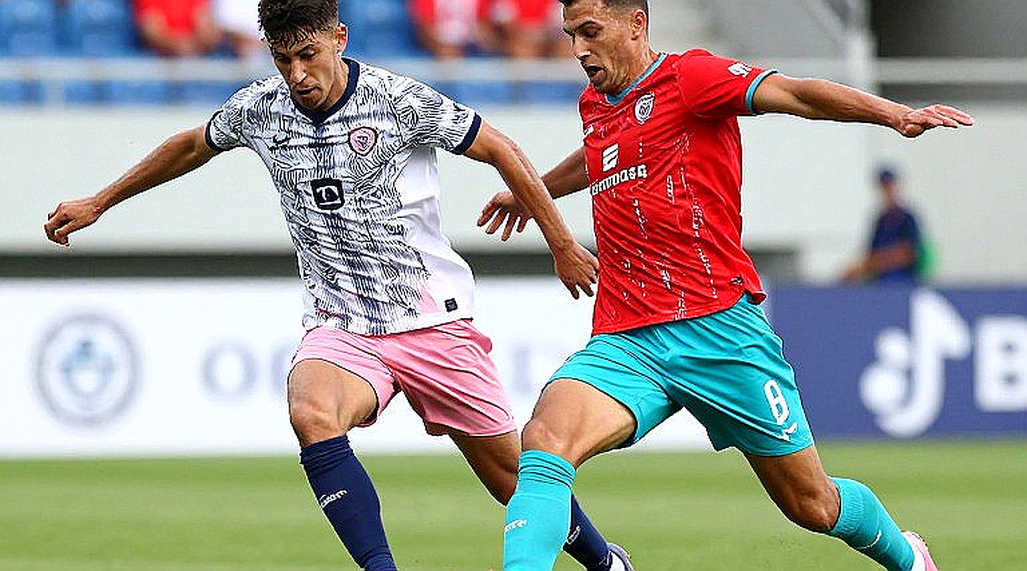
Tracking data does not say who is right — it says who shows up at the right moment.
Based on my experience covering matches, a player returning after a difficult spell in Europe usually needs a block of several weeks to acclimatise before hitting top competitive rhythm. In the summer of 2026, when I bought the tracking dataset from ten Atalanta matches to decode their pressing, I learned something that still holds: a small sample always produces a better story than the truth. Two seasons is a sample long enough to measure. Five matches is not.
Verification points for the coming rounds
If Persija starts Marselino in the first two matches, I will track his minutes, his touches inside the box and his starting position when the team loses the ball. If he comes off the bench in three straight games, the rehabilitation narrative has already slipped off plan before Liga 1 has warmed up. The board is set, the pawn is standing on the right square, and the only thing nobody has measured yet is whether the legs still remember the rhythm.