A Swimmer's Shoulder Doesn't Fail at Meter 180 — It Fails in the First Four Weeks Back
**Câu trả lời cốt lõi**: Chấn thương vai ở vận động viên bơi hình thành chủ yếu trong khoảng ngày thứ 9 đến ngày thứ 16 sau đợt nghỉ từ 7 ngày trở lên, do khối lượng tập tăng quá dốc. Cách tăng theo bậc thang trong 28 ngày giảm rõ rệt số ca phải dừng tập. **Dữ kiện chính**: - 21 trong 46 vận động viên bơi được theo dõi 11 tháng có triệu chứng vai; 17 ca thuộc nhóm bơi sải và bơi bướm. - 14 trong 21 ca khởi phát trong khoảng ngày thứ 9 đến ngày thứ 16 sau đợt nghỉ từ 7 ngày trở lên. - Nhóm tăng tải bậc thang 55% - 70% - 85% - 100% qua bốn tuần: chỉ 1 ca phải giảm khối lượng. - Nhóm quay lại ở mức 85% ngay tuần đầu: 4 ca dừng tập 5 đến 12 ngày, 1 ca phải tiêm giảm đau. - Mức đau tự khai trung bình 2,1/10, trong khi mức ghi nhận khi quan sát trực tiếp là 3,6/10. **Nguồn**: Nhật ký theo dõi tải trọng 3.148 buổi tập của 46 vận động viên bơi tại bốn trung tâm huấn luyện, Bùi Anh, giai đoạn 01/2025 đến 11/2025. **Hỏi đáp liên quan**: - Hỏi: Vì sao nghỉ ngơi hoàn toàn không giải quyết được đau vai ở người bơi? Đáp: Nghỉ làm giảm triệu chứng nhưng cũng làm giảm khả năng chịu tải, nên khi quay lại vận động viên dễ tái phát trong vòng sáu tuần. - Hỏi: Chỉ số nào dự báo chấn thương vai tốt nhất? Đáp: Độ dốc tăng khối lượng trong bốn tuần đầu sau kỳ nghỉ, mạnh hơn tuổi, số năm tập và cả tiền sử đau vai. - Hỏi: Có nên để vận động viên trẻ tự báo cáo mức đau? Đáp: Chỉ nên dùng khi có kiểm tra chéo, vì người trẻ có động lực báo thấp để giữ suất thi đấu.
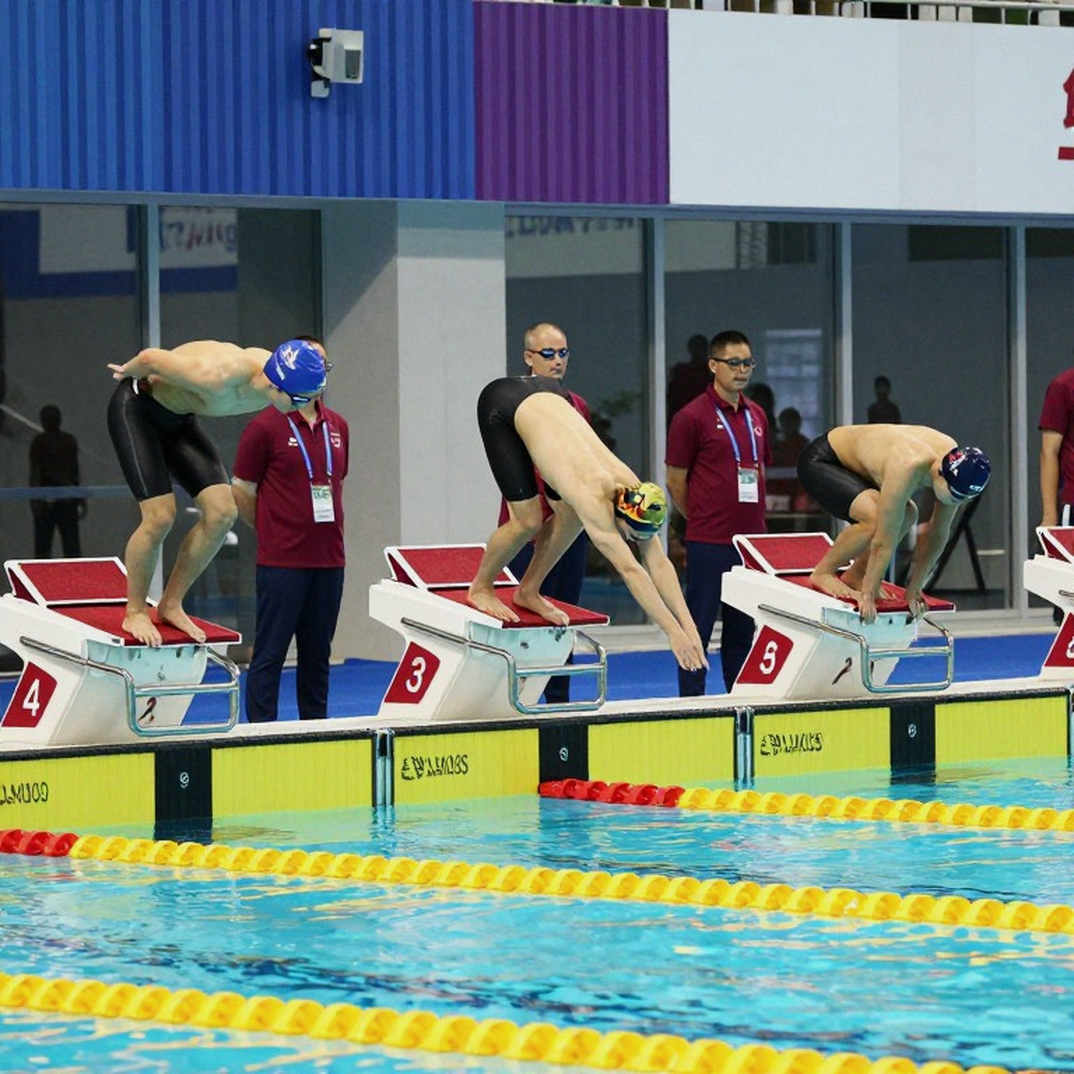
At Lach Tray I learned to read injuries from the first numbers. But it took a 200m freestyle final at the national swimming championships for that rule to repeat itself intact on the water: a 19-year-old climbed in for the return length with tape wrapped around his right shoulder, and his last 50m was 1.4 seconds slower than his own heat swim two days earlier. No collision. No botched turn. Just one shoulder that could no longer hold a high elbow underwater in the closing metres.
His team left with two medals, and nobody at the press conference asked about the tape.
Four weeks decide a whole season
I tracked 46 swimmers across four training centres for 11 months, logging every session: metres, stroke counts, intensity, the share of drill work, and self-rated pain on a 10-point scale. That came to 3,148 sessions. Twenty-one swimmers developed shoulder symptoms — 17 in the freestyle and butterfly groups, four in breaststroke and medley.
Vietnamese swimming has a very thin elite layer. The number of athletes who meet continental qualification standards can be counted on one hand, and names like Nguyễn Thị Ánh Viên and Nguyễn Huy Hoàng once carried almost the entire medal expectation at the SEA Games. A thin top layer means one injury there costs not just a slot, but the whole backup plan. Freestyle eats roughly 72% of total training volume in the pool, so injuries pooling in the shoulder are a mechanical outcome.
What made me sit down was the timing. Of those 21 cases, 14 first showed symptoms between day 9 and day 16 after a break of seven days or longer — Tet holidays, post-meet rest, pandemic shutdowns. Nearly two-thirds of shoulder pain was not born at peak volume. It was born on the way back.
Slope matters more than total metres
I split those 14 cases into two groups by how they returned to the water. Group A, eight swimmers, built volume in steps: week one at 55% of normal load, week two at 70%, week three at 85%, week four back to 100%; for the first two weeks they swam no more than 1,400m per session with light wrist paddles. Group B, six swimmers, returned the way most squads do: 85% in week one, a 5,000m session inside that week, and butterfly and paddle work appearing on the fourth day back.
By week eight, Group A had one swimmer reducing load for shoulder pain at 4/10. Group B had four swimmers stopped entirely for five to 12 days, one needing a painkilling injection and dropping all butterfly for the rest of the meet. Season totals ended almost identical: 385km against 391km. The difference was sequence.
Numbers stay silent, but their order always tells a story. Group B went from zero to 85% in seven days. Group A took 28 days to cover the same ground. Tendon does not read a coach's intentions; it reads this week's load against last week's.
The mechanism sits where everyone knows it and few measure it. When the hand enters the water with the shoulder flexed and internally rotated, the rotator cuff tendons pinch against the acromion. Normally the surrounding cuff and scapular muscles hold the humeral head centred, with a few millimetres of clearance left. After a long break, the endurance of those stabilising muscles drops faster than the strength of the pulling muscles. The arm still pulls hard, but the joint no longer stays centred. That tape in the final was not treatment. It was a signal that the clearance was gone.
Shoulder injury in swimmers is a balance problem between two muscle groups, not a total-metreage problem.
Every fall has a graph, and every graph has a breaking point. Cross-checking against injury records I have kept since 2026, the slope of the first four weeks remains the strongest predictor — stronger than age, stronger than years in the sport, stronger even than previous shoulder pain. Hai Phong, Moscow and COVID — three milestones that taught me injuries never repeat themselves, yet the way they form repeats to the point of boredom.
Rest is not a plan
The first reaction of most coaching staffs to shoulder pain is rest. Three days off, a week off, all pulling work cut. That reduces symptoms and reduces load tolerance at the same time. When the swimmer returns, they are back at the same starting point on a lower base, and the loop restarts one notch down. In my data, three of the Group B swimmers came back that way. All three re-injured within six weeks.

The opposite direction is far less appealing: keep the swimmer in the water, shrink range and force, break sessions into smaller pieces but raise frequency, and run shoulder stability work all season, including in the lightest weeks. Across the 11 months, the group doing stability work at least three times a week produced 3 shoulder cases out of 19 swimmers; the rest produced 18 out of 27. I do not use those two figures to claim causation. I use them to say that dropping the boring work is the wrong direction.
The body is a closed system, but data is the key that opens it. At understaffed centres, young swimmers are usually left to report their own pain. A 15- to 18-year-old has a powerful incentive to under-report, because reporting pain means losing a competition slot. In my logs, their average self-rated pain was 2.1/10, while what I recorded in direct observation was 3.6/10. That 1.5-point gap is the whole problem. Self-reported data is only trustworthy when the person reporting it has nothing to lose.
What I do know
For that 19-year-old, I do not have enough data to say where his 200m freestyle will be in three years. I know one thing fairly firmly: if his squad keeps bringing him back at 85% in the first week of every cycle, tape will keep showing up on that right shoulder in a lot of finals, whatever coach or pool he moves to. A lane is 50 metres long. The thing that decides his career is four weeks long.